All Science
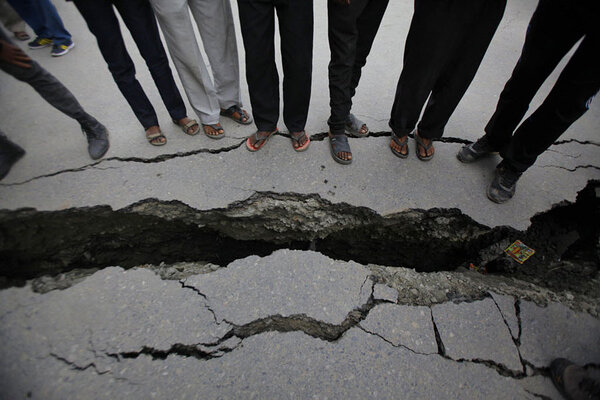 Earthquakes on the rise in Texas, caused by human activityHuman activity has been causing earthquakes for more than 90 years in the Lone Star state, and that has only gotten worse in the past decade, according to a review of historical data.
 First Look'Some pig.' Researchers unravel 鈥楥harlotte鈥檚 Web鈥�-inspired 鈥榣iquid wire鈥�Researchers have recreated the mechanism of a spider's web, a self-repairing 'liquid wire' with dual liquid-solid properties.
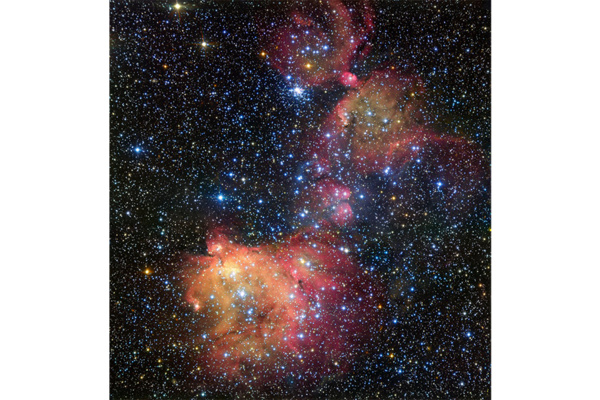 Sublime image reveals superbubbles, star formation, and satellite galaxiesThe mesmerizing colors of a satellite galaxy blaze in a new image from the European Southern Observatory's Very Large Telescope array, hinting at young stars' creation.聽
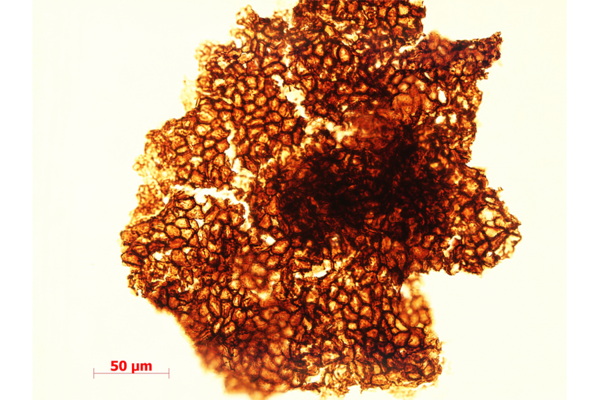 What did it take to be giant 1.56 billion years ago?Fossils discovered in northern China represent the largest macroscopic eukaryotes known to live on Earth 1.56 billion years ago, despite being just 11 inches at the longest.聽
 GMO crops are safe, say scientists. Do they need labels anyway?The National聽Academies of Sciences, Engineering and Medicine found no evidence genetically-modified crops pose a danger to health or the environment. But the report still recommends GMO labels.聽
 First LookCould this 'Little Lion' galaxy hold secrets about the Big Bang?Astronomers have found a galaxy with the lowest levels of metal yet discovered. The 'Little Lion' galaxy could hold lessons about the environment of the early universe.
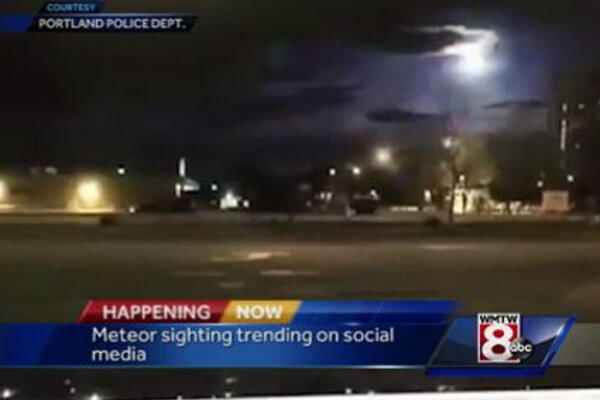 Watch brilliant meteor dazzle in New England skyA meteor burning up in the atmosphere was caught on a Maine police dashboard cam as an officer watched for speeding motorists.
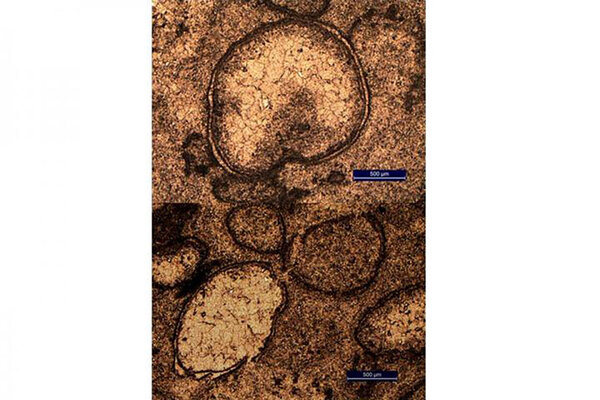 Evidence of humongous asteroid unearthed in AustraliaScientists studying some of the oldest known layers of sediment on the globe have found evidence of one of the biggest asteroid impacts ever to blight the Earth's surface.
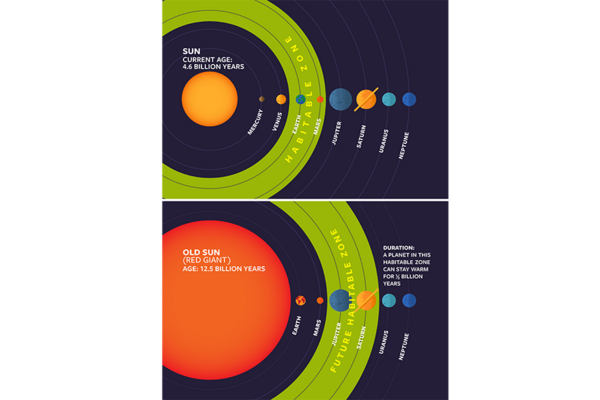 Are we pointing telescopes in the right direction to find alien life?Some astronomers suggest that besides looking at planets near middle-aged stars, like our sun, we should be looking for life on thawing planets around older, red giant stars.
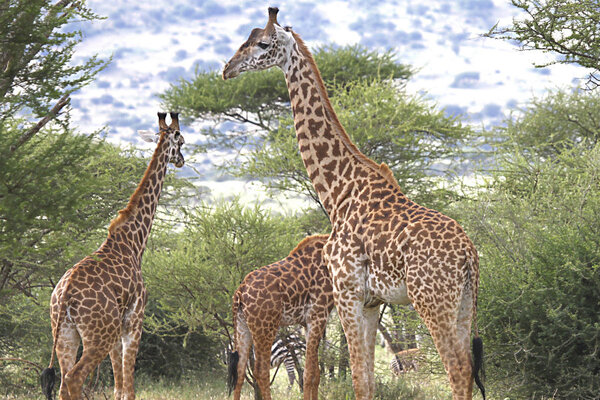 Giraffes: Why the long neck? Scientists crack evolutionary codeScientists may have figured out why the giraffe has such a long neck. Can conservation efforts protect the animal's population, which has fallen 40 percent in just 15 years?
 First LookAround the world in 90 minutes: ISS completes 100,000th orbitSince its launch in 1998, scientists have conducted some 1,900 experiments aboard the International Space Station.
 First LookThese physicists accidentally programmed AI to do their jobA team of Australian physicists wrote an artificial intelligence program to make their job easier. They didn't expect it would be able to take over the experiment.
 How volcanoes moved mountains on Jupiter's moon IoThe mountains on Jupiter's moon Io can reach more than 10 miles high. And scientists may finally be closer to understanding the dynamic processes behind their formation.
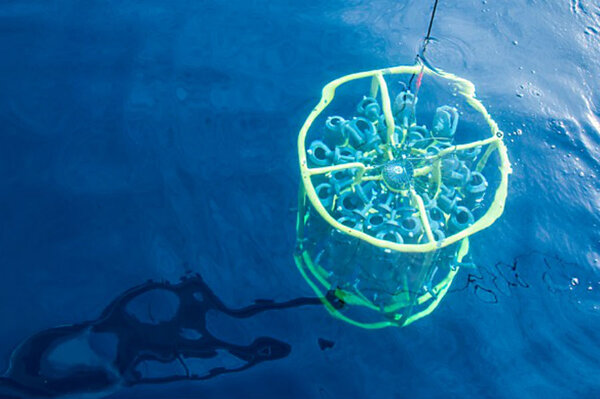 How an itty-bitty ocean-dwelling bacteria helps regulate our climateIn researching some of the smallest, simplest cells known to science, researchers have made an accidental discovery, putting these bacteria at the center of a cycle that helps regulate our planet's climate.
 First LookFlorida sinkhole turns back the clock for first AmericansFossils recovered from a sinkhole in the聽Aucilla River on Florida鈥檚 Gulf Coast suggest that humans lived in America some 1,500 years earlier than previous models suggested.
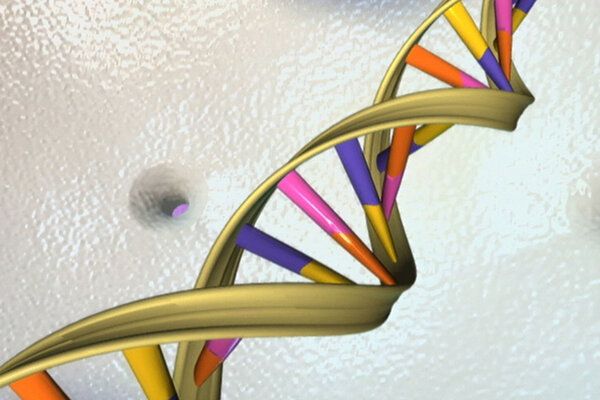 First LookWhy did Harvard scientists hold a 'secret' synthetic genome meeting?A closed-door meeting at Harvard Medical School brought together 150 scientists, lawyers, and entrepreneurs to discuss the future of building human, or other organism, genomes from scratch.聽
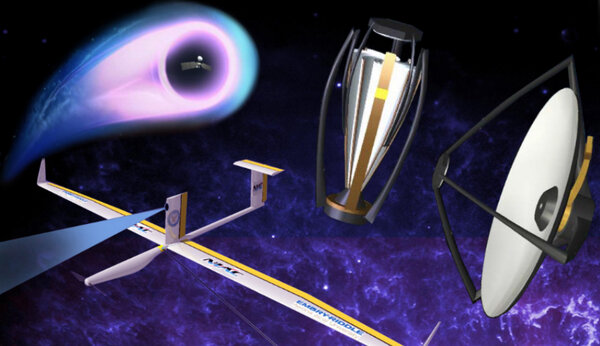 NASA picks eight innovative tech projects to fund for futureThe national space agency announced eight finalists who will receive funding through its聽Innovative Advanced Concepts program to further develop their future technology proposals.
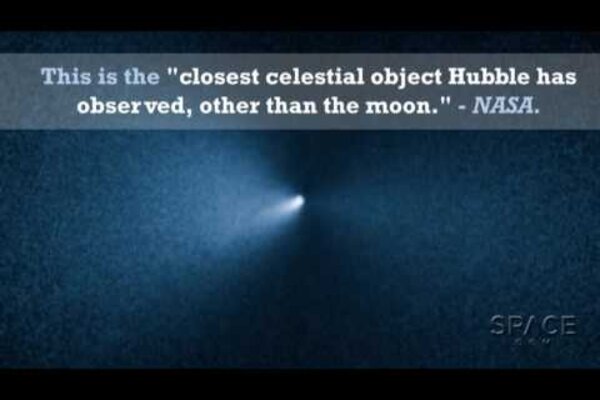 First LookHubble captures illuminating video of comet flashing past EarthA time-lapse video shows Comet 252P/LINEAR spinning like a lawn sprinkler after it zoomed by Earth on March 21 in one of the closest encounters between a comet and our planet.
 How likely is it that a mega tsunami strikes Hawaii?Researchers calculate there may be a 9 percent chance of a mega tsunami hitting Hawaii in the next 50 years, but having an accurate prediction model is a huge step forward, they say.
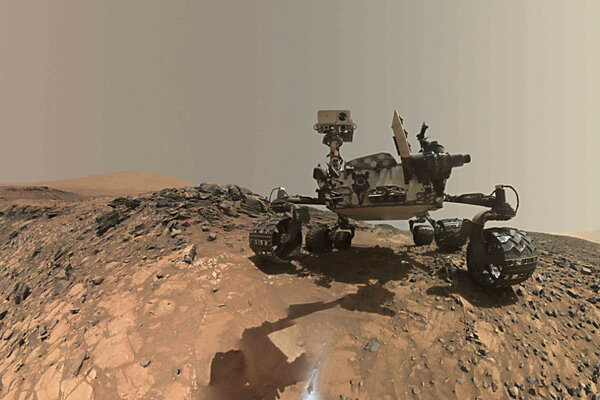 The seasons on Mars: NASA's Curiosity rover paints a pictureThe Curiosity rover has now spent two full years - Martian years - on the red planet, sampling the seasonal fluctuations and sifting them from one-off anomalies.