All Science
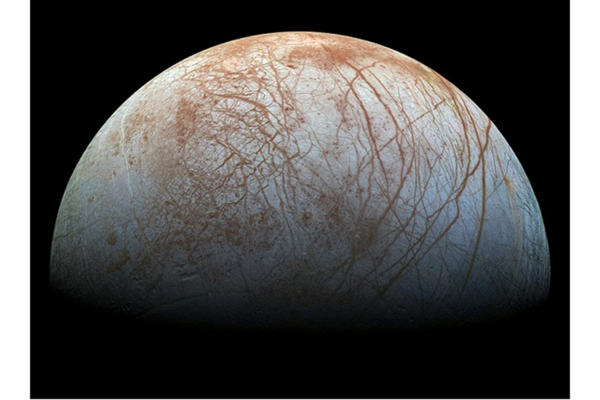 Is this moon of Jupiter covered in sea salt?Scientists suspect that the brown streaks seen on the surface of Jupiter's moon Europa is actually sea salt that has been bombarded with radiation.
- Scientists investigate mysterious force that snuffs out galaxiesWhy are some galaxies gas-rich and able to form new stars, while others are gas-deprived and dying? New research offers insights into how galaxies are 'strangled.'
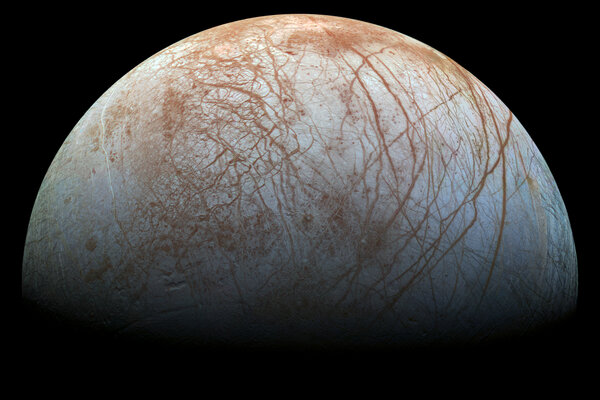 Why is there irradiated sea salt on the surface of Jupiter's moon?A team of scientists at NASA's Jet Propulsion Laboratory determined what the brown lines on the surface of Europa are made of.
 Google celebrates Inge Lehmann, discoverer of Earth's inner coreOn what would be Inge Lehmann's 127th birthday, a Google Doodle pays homage to the influential Danish seismologist.
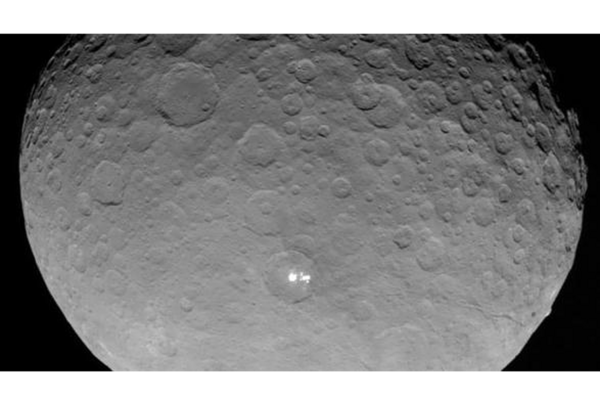 What are those bright spots on Ceres? NASA space probe gets closer look.On May 3 and 4, NASA's Dawn spacecraft got its closest views yet of the dwarf planet Ceres and its mysterious bright spots.
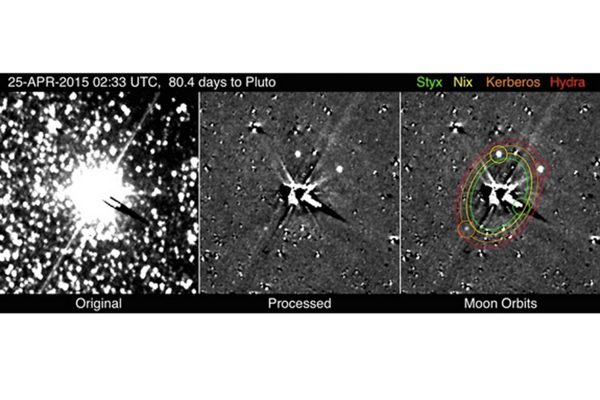
- NASA space probe spots all five of Pluto's known moonsNASA's聽New Horizons spacecraft is now close enough to Pluto that it can capture images of all five of Pluto's known moons:聽Charon, Hydra, Nix, Kerberos and Styx.
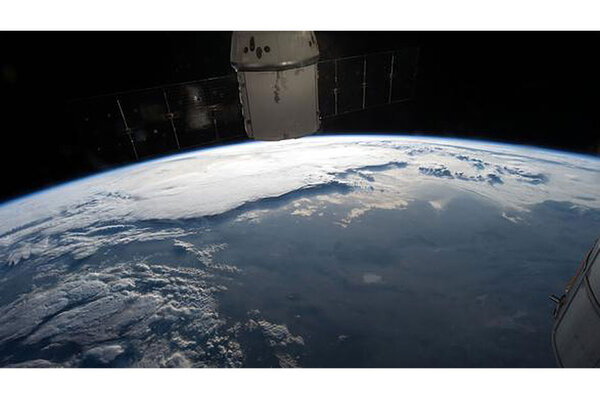 Astronauts stuck on ISS: Russian rocket malfunction delays their returnAstronauts stuck on ISS:聽Astronauts aboard the International Space Station scheduled to return home later this month will have to wait until June, as Russia looks into what caused its Progress cargo ship to lose control.
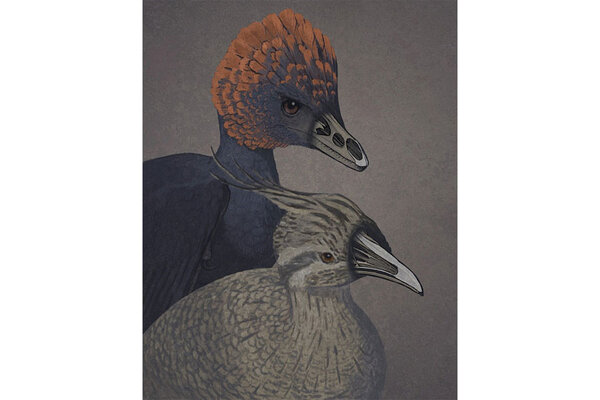 Can we reverse-engineer dinosaurs out of chickens?To gain insight about how birds' beaks evolved, scientists reverted the beaks of chicken embryos so that they were more like their reptilian ancestors.
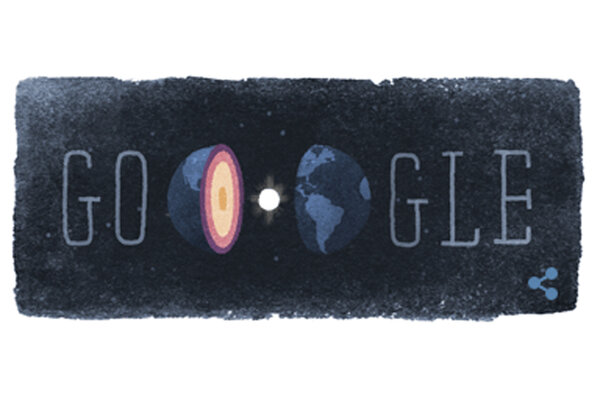 Science NotebookHow Inge Lehmann discovered the truth about the Earth's coreInge Lehmann, who is honored Wednesday with a Google Doodle, made a name for herself at a time when there were few women scientists. Yet her rigorous observations of earthquake movements allowed her to glimpse the nature of the Earth's core.
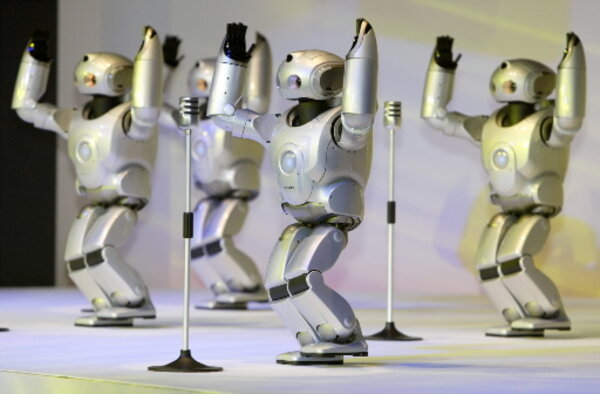 Could your next pet be a robot?Can humans form the same attachment to robots that they do to animals? Several studies indicate they can.
 Computer fails to beat humans in Carnegie Mellon poker faceoffCarnegie Mellon鈥檚 poker-playing AI fell short of victory in an 80,000-hand faceoff with human pros.
 Elusive Siberian tigers captured in spectacular photosA duo of photographers have snapped spectacular photos of Russia's Amur tigers.
 How NASA technology found trapped Nepal earthquake survivorsA new piece of hardware that detects heartbeats helped find buried victims of the earthquake.聽
 Italian astronaut answers everyone's first question about spaceflightThe toilets work by suction, explains Italian astronaut Samantha聽Cristoforetti, in a video shot aboard the International Space Station.
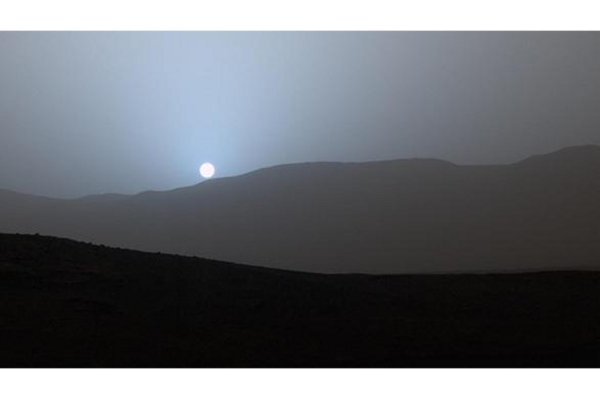
- A blue sunset on the Red Planet (+animation)NASA's Curiosity rover has recorded the sunset on Mars, which is tinted blue because of the way dust in the Martian atmosphere scatters sunlight.
 Mother's Day snowstorm: Is it weird to get snow this late?A blizzard that was moving into the northern Midwest on Saturday night was slated to drop as much as two feet of snow on聽the Dakotas. Is it unusual to get snow this late in the spring?
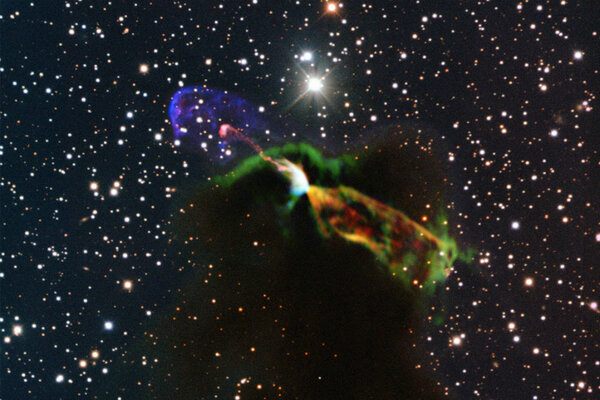 Did a telescope reveal a 'hole' in space?European astronomers took a break from looking at stars, and instead focused on an apparent empty spot in space.
 NASA wants your ideas on how to keep Mars colonists safeNASA is asking the public for its thoughts on how to help people survive on Mars with minimal assistance from Earth.聽
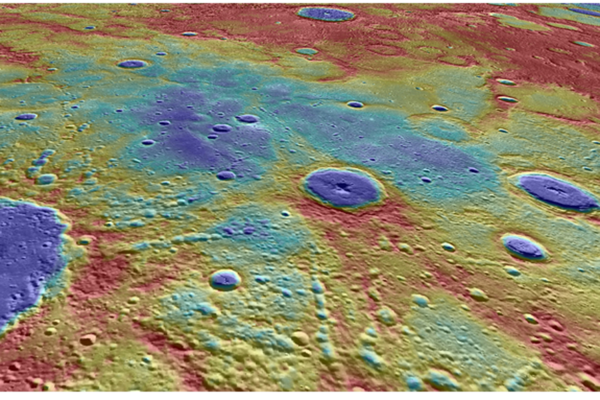 NASA space probe unlocks mysteries of Mercury's magnetic fieldPossibly billions of years old, Mercury's magnetic field may have once been as strong as that of Earth, suggests data from NASA's MESSENGER probe, which recently crashed into the planet closest to the sun.聽
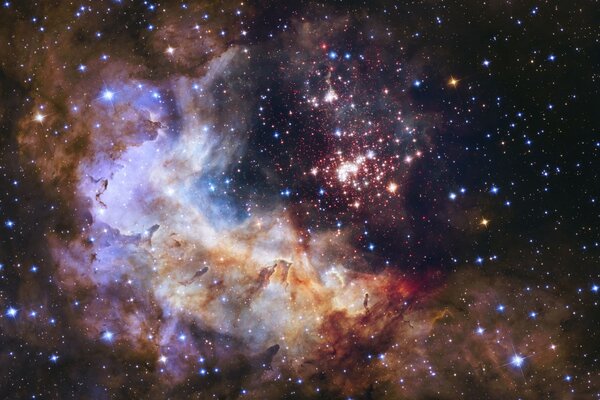 Science NotebookBeyond the visible: How space photos get their colorSpace photos use infrared and ultraviolet light sensors to show us planets in our solar system and distant galaxies. That means the photos we see have to be artificially colored to give a sense of what those objects might look like to human eyes.