All Science
 Global warming began in oceans 135 years ago, suggests studyA study of temperature recordings from the 1870s suggests that the oceans began warming more than 100 years ago, much earlier than previously believed.
 Planets found at dawn of universe, but their existence is a mysteryScientists have found two planets orbiting a star that formed only a billion years after the big bang. But the universe had few planet-making elements then, so how did the planets form?
 Head of 'faster-than-light' neutrinos team resignsItaly's National Institute of Nuclear Physics said Friday that Antonio Ereditato had stepped down from the leadership of the OPERA experiment, whose measurements on the聽speed聽of neutrinos were widely questioned when they were announced in September.
 Are bees threatened by insecticide use? New studies say yes.Scientists found that one class of insecticides may harm both bumblebees and honeybees in two recent studies. Bees' important role as pollinators may be threatened.聽
 Are pesticides responsible for bee deaths?Important pollinators, both bumblebees and honeybees have trouble functioning after being exposed to pesticides, two new studies say. Industry experts question several aspects of the work.
 How did humans evolve to walk upright? Fossil discovery complicates the picture.Foot bones unearthed recently in Ethiopia belonged to a contemporary of 'Lucy,' the 3.2-million-year-old early human discovered in 1974. But these bones seem to belong to a different species, one thought to have split its time between walking upright and climbing trees.聽
 Amazon's Jeff Bezos to search for sunken Apollo 11 enginesAmazon CEO Jeff Bezos says that his deep-sea sonar expedition in the Atlantic has located the five engines used to launch Neil Armstrong, Buzz Aldrin, and Michael Collins to the moon in 1969, and he plans to bring at least one of them to the surface.聽
 US Army tests robot that can jump 30 feet highDeveloped by Boston Dynamics and Sandia National Labs, the Sand Flea reconnaissance robot can leap through a second-floor window.聽
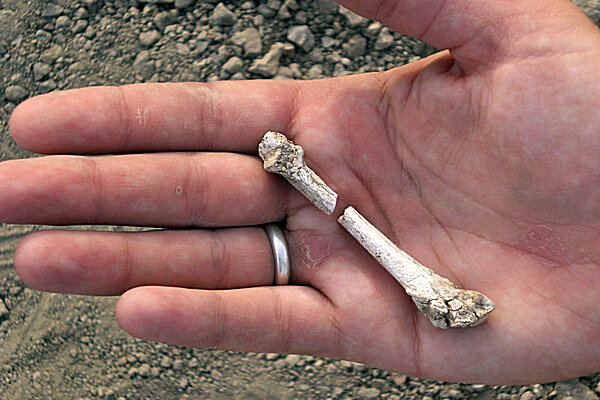 Fossil discovery could unravel mystery of how humans learned to walkThe discovery of foot bone fossils from an early hominin may help unlock the mystery of how humans learned to walk upright. 聽
 How thoughtful farming could curb climate change, feed the worldPolicy makers may begin to address climate change by encouraging sustainable agriculture practices around the world, according to a new report.
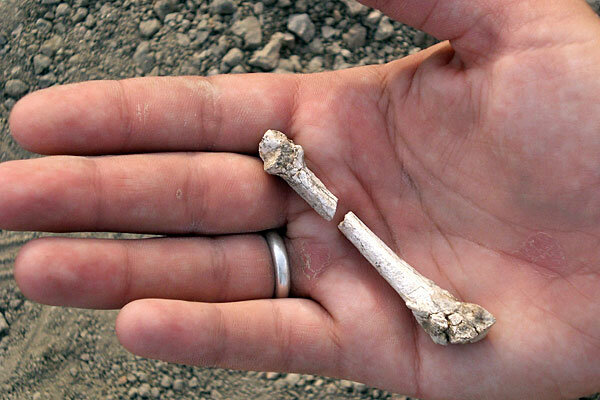 Fossil find sheds light on how humans evolved to walkA discovery in Ethiopia聽of 3-million-year old foot bones that once belonged to a human relative suggests that human bipedalism evolved more than once.聽
 Climate change report: Watch out Mumbai and MiamiA new climate change report says parts of Mumbai, India, could become uninhabitable from floods, storms and rising seas. Other coastal ciies, such as Miami, are also at risk from rising seas.
 Astronomers say that there are billions of potentially habitable planets in our galaxyA team of European astronomers say that about 40 percent of red dwarf stars - the most common type of star in the Milky Way - have at least one planet whose temperatures would allow liquid water on the surface.
 Study indicates existence of billions of habitable alien planets in Milky WayA survey of red dwarf stars suggests that, in our galaxy alone, there are tens of billions of planets orbiting their stars' 'habitable zones.'聽
- Scientists found hammerhead sharks have twin cousinThe newly found scalloped hammerhead shark faces similar existential threats as its look-alike fishy cousin.
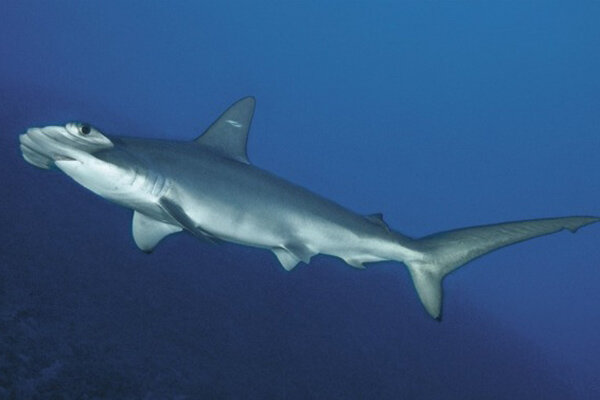 Hammerhead shark twin discovery creates concern for speciesThe scalloped hammerhead shark has a twin, scientists have discovered. And that discovery may show that scalloped hammerheads are rarer than first thought.
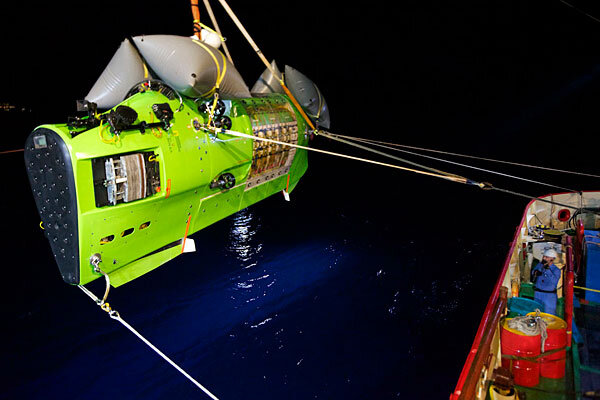 What James Cameron saw 6.8 miles deep in Mariana Trench
 How do we know that Challenger Deep is lowest point on Earth?Using a custom-built submersible, filmmaker James Cameron has successfully visited the Challenger Deep, the deepest point in the world's oceans? How do we know that there isn't somewhere deeper?聽
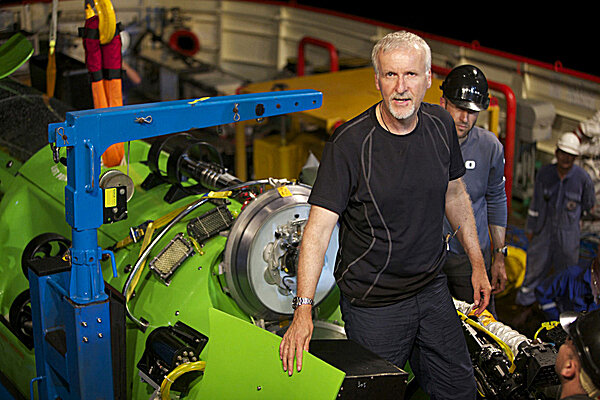 James Cameron describes deepest spot in ocean as 'barren'Filmmaker James Cameron became the first person to make a solo dive to Challenger Deep, the deepest known point in the ocean, in a custom-built submersible.聽
 James Cameron dive launches race to the bottom of the worldBefore James Cameron made a solo dive to the Challenger Deep 鈥� the deepest point in the ocean 鈥� only one mission had been there before. Now, several groups are planning deep-sea dives, and engineering advances could shed new light on the region.聽