
海角大神

2026
April
30
Thursday

Monitor Daily Podcast

April 30, 2026
Loading the player...
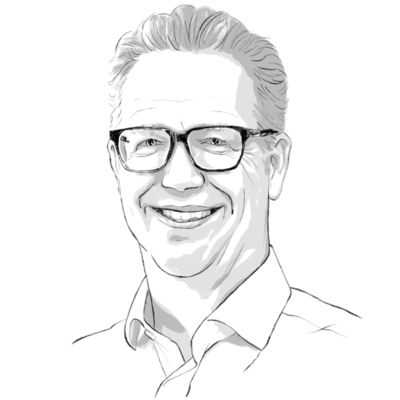
Matthew Bell
International desk editor

It doesn鈥檛 actually exist anymore, bureaucratically speaking. That鈥檚 because the official name was decommissioned in 1985. But the old Route 66 鈥 also known as the 鈥淢ain Street of America鈥 鈥 stretching 2,400 miles across eight U.S. states, from Chicago to Santa Monica 鈥 is turning 100.

And it鈥檚 still one of the most famous roads in the world. One historian calls it both a place and an idea: about freedom, democratic participation, and an imaginary home. So, what can Route 66 still tell us about ourselves? Harry Bruinius dives into that question. It鈥檚 one of our top stories today at 海角大神. It鈥檚 also part of a larger reporting project that we鈥檙e doing this summer, focused on the 250th anniversary of the Declaration of Independence.


You've read  of  free articles. Subscribe to continue.

News briefs

Battle for control of U.S. central bank intensifies, and oil price surges. Jerome Powell, outgoing chairman of the Federal Reserve, said he would stay on when his term ends next month. His decision marks the first time a Fed chair has decided to remain on the board since 1948 and potentially deepens disagreement over monetary policy at a time when inflation is edging upward. The Senate Banking Committee approved Kevin Warsh, President Donald Trump鈥檚 nominee to lead the institution, on a party-line vote. A divided Fed left inflation rates unchanged on Wednesday after inflation edged upward to 3.3% in March. The price of Brent Crude, meanwhile, rose this morning to $123 鈥 nearly double the price before the Iran war 鈥 amid uncertainty over reopening the Strait of Hormuz.

Ten European countries agreed to form a joint naval force to deter Russia. The plan, announced Wednesday by the head of Britain鈥檚 Royal Navy, is to create a multinational maritime group as a 鈥渃omplement to NATO.鈥 It does not include the United States, which has been urging Europe to take more responsibility for its own defense. The Northern Navies Initiative includes the Netherlands, Baltic states, and Nordic countries. It comes after Britain revealed recent Russian submarine activity around submerged cables and pipelines near its waters.

Our coverage: With trust in US wavering, NATO allies meet in Brussels and Munich to forge new ties

The U.S. charged a Mexican governor and nine other state officials with drug trafficking. The Justice Department indictment marks an escalation in Washington's decades-long war on drugs 鈥 which already reached new heights over the past year through targeted boat strikes on alleged traffickers and classifying several drug cartels as terrorist groups. Charging a sitting, high-level Mexican politician in the U.S. is rare. It comes less than two weeks after Mexico鈥檚 president said she learned U.S. intelligence operatives were working inside Mexican territory. Sinaloa Governor Rub茅n Rocha Moya denied on X the allegations that he鈥檇 conspired with the Sinaloa Cartel.

Our coverage:Boat strikes off Venezuela mark shift in 54-year US war on drugs

A unanimous Supreme Court backed an anti-abortion center in a First Amendment case.听New Jersey鈥檚 attorney general had subpoenaed First Choice Women鈥檚 Resource Centers for a list of its anonymous donors or face liability for being in contempt of court. The religious nonprofit, which offers advice to pregnant women, argued that the state鈥檚 demand would impede donations. In a 9-0 decision cheered by both the American Civil Liberties Union and anti-abortion groups, the court allowed First Choice to challenge the subpoena in federal court without having to wait to first be held in contempt. Justice Neil Gorsuch wrote that the subpoena burdened First Choice鈥檚 associational rights.

Moscow is paring back its annual Victory Day Parade. The most important holiday on the Russian calendar is the May 9 anniversary of the USSR鈥檚 victory over Nazi Germany. It is typically celebrated with a parade across Red Square featuring tanks, troops, and missiles. This year, in a sharp break from tradition, the event will be greatly scaled down. The Kremlin cited 鈥渢he current operational situation鈥 for the decision to exclude armored vehicles and young cadets, apparently to avoid offering a tempting target for the long-range Ukrainian drone strikes.

Compiled by Monitor writers around the world


Today’s stories

And why we wrote them

Nathan Howard/Reuters
The Supreme Court building in Washington, April 29, 2026. In a 6-3 decision on Wednesday, the majority of justices struck down a Louisiana congressional map which had carved out two majority-Black districts, ruling that the map was an unconstitutional racial gerrymander.

In a major voting rights case, the Supreme Court struck down Louisiana鈥檚 congressional map, calling it an unconstitutional race-based gerrymander. This continues a decadelong trend of the high court reinterpreting the 1965 Voting Rights Act.

Bill Clark/CQ Roll Call/AP
Democratic Rep. Terri Sewell of Alabama speaks during a Congressional Black Caucus news conference after the Supreme Court's ruling in Louisiana v. Callais, at the U.S. Capitol, April 29, 2026.

At least a dozen majority-minority districts, many in the South, could theoretically be redrawn in the wake of this week鈥檚 Supreme Court ruling. But states that might look to redistrict are facing imminent deadlines on the election calendar.

Jeff Roberson/AP/File
Terry and Christie Partee visit Route 66 Neon Park inside George M. Reed Roadside Park along historic Route 66 in St. Robert, Missouri, Nov. 18, 2025.

Route 66 traces the tale of a century of American life: pioneers, immigrants, economic booms and busts, lore and legends. The Monitor will explore the historic road and the people and places that are still telling our shared story today.

Saudi Press Agency/Reuters
Saudi Foreign Minister Faisal bin Farhan al Saud, at right, receives United Arab Emirates' Deputy Prime Minister and Minister of Foreign Affairs Sheikh Abdullah bin Zayed Al Nahyan ahead of a meeting of the Gulf Cooperation Council, in Jeddah, Saudi Arabia, April 28, 2026. The UAE has been pursuing a more go-it-alone posture in the Gulf.

For years, the business-friendly United Arab Emirates had sought regional normalization. Now, after being targeted by Iran, it is pushing the United States to demand greater concessions from Tehran, and is pressing its neighbors to cooperate militarily.

Patterns

Tracing global connections

The Iran war has brought change to the climate-policy debate. In many countries, a revived interest in greener energy might well be here to stay.

A U.S. law from 1973 sets a 60-day limit for military operations that haven鈥檛 been approved by Congress. The Iran conflict is hitting that deadline. It鈥檚 the latest test of how Congress 鈥 and the president 鈥 view the war and their respective powers.

Kendra Nordin Beato/海角大神
Blooming saucer magnolia trees line the streets of Boston鈥檚 Back Bay neighborhood April 28, 2026. The brownstone buildings provide the resilient trees with shelter and warmth. The magnolia trees were planted by a neighborhood effort spearheaded by Laura Dwight in the 1960s.

April in Boston is known for daffodils, the Boston Marathon, and the Back Bay鈥檚 blooming magnolia trees. It was one woman鈥檚 vision for planting magnolias in the 1960s that transformed the neighborhood into the spring stunner it is today.


The Monitor's View

Fatima Shbair/AP
The skyline of Dubai, United Arab Emirates, March 11, 2026.

By many accounts, these are the days of resource nationalism. China tries to control exports of its rare earth minerals. The United States restricts certain exports of advanced computer chips. Even a few West African countries that dominate cocoa听production often collude to control prices for the world鈥檚 chocolate-makers.

Yet history teaches that a zero-sum mentality of resource manipulation or price-fixing among rivals often ends up pushing consumers to find creative ways to adjust. Cartels or monopolies then crack apart. The natural state of free competition in a market returns. And the notion that one can only get ahead if somebody else loses starts to recede.

A good example of how mercantilism can melt away could be happening now. On Tuesday, one of the world鈥檚 top oil producers, the United Arab Emirates, announced it is quitting OPEC, along with the cartel鈥檚 stringent quota system among member states to rig global petroleum prices. The UAE, which produces about 12% of OPEC鈥檚 oil, said it would now align its prime export 鈥渨ith demand and market conditions.鈥

The Gulf Arab nation has other reasons to exit. A fellow OPEC member, Iran, has bombed the UAE more than it has Israel during the recent war. Saudi Arabia, the cartel鈥檚 strongest member, differs with the neighboring UAE on many geopolitical issues. And the UAE wants to align more closely with nations that practice market fundamentals in anticipation of the end of the fossil fuel era.

And it seeks to quickly monetize its current oil deposits, free of quotas. 鈥淥il, no matter how much we defend it, it鈥檚 in decline mode,鈥 UAE Energy Minister Suhail al-Mazrouei said publicly in 2022. 鈥淭o assume oil is going to be there forever is wishful thinking.鈥

Most of all, oil-consuming nations have adjusted since OPEC鈥檚听oil embargo of 1973 and its price-fixing ever since. In particular, the U.S. shale-oil revolution has eroded the cartel鈥檚 clout. At its peak, OPEC had 16 members and controlled most of the world鈥檚 proven听oil听reserves. As some of its smallest-producing members have quit, and now that oil giant UAE is leaving, its market share will be less than 50%. It will be left with only 11 members.

Further defections are now widely anticipated. As Robert Frost poetically opined, 鈥淪omething there is that doesn鈥檛 love a wall.鈥 One of history鈥檚 most powerful cartels might finally be discovering that it cannot put up barriers to market freedom and creative ideas in energy uses. Material resources may be finite. But not the resources available to human thinking.


A 海角大神 Science Perspective

About this feature

Each weekday, the Monitor includes one clearly labeled religious article offering spiritual insight on contemporary issues, including the news. The publication 鈥 in its various forms 鈥 is produced for anyone who cares about the progress of the human endeavor around the world and seeks news reported with compassion, intelligence, and an essentially constructive lens. For many, that caring has religious roots. For many, it does not. The Monitor has always embraced both audiences. The Monitor is owned by a church 鈥 The First Church of Christ, Scientist, in Boston 鈥 whose founder was concerned with both the state of the world and the quality of available news.

Choosing how we think determines our experiences, and choosing to follow God will always bring peace and healing. An article inspired by the Bible lesson for April 27-May 3 from the 海角大神 Science Quarterly.


Viewfinder

Markus Schreiber/AP
Mail carrier Andrea Bunar stands on a barge, using one long oar to row, steer, and navigate through narrow waterways during the first tour of the warmer months, when mail can be delivered to the village of Lehde in eastern Germany, April 29, 2026. The village has been getting its mail by boat for 129 years.
( The illustrations in today’s Monitor Daily are by Jacob Turcotte and . )

More issues

2026
April
30
Thursday

Give us your feedback

We want to hear, did we miss an angle we should have covered? Should we come back to this topic? Or just give us a rating for this story. We want to hear from you.