This is the third time that courts are being asked to consider a Trump administration travel ban. Should that matter? No. But it raises questions about justice. For example, can an administration get what it wants through repetition?
Our name is about honesty. The Monitor is owned by The First Church of Christ, Scientist, and we鈥檝e always been transparent about that.
The church publishes the Monitor because it sees good journalism as vital to progress in the world. Since 1908, we鈥檝e aimed 鈥渢o injure no man, but to bless all mankind,鈥 as our founder, Mary Baker Eddy, put it.
Here, you鈥檒l find award-winning journalism not driven by commercial influences 鈥 a news organization that takes seriously its mission to uplift the world by seeking solutions and finding reasons for credible hope.
About usAlready a subscriber? Log in
Already have a subscription? Activate it
Join the Monitor community.
Subscribe
Mark Sappenfield
Austria鈥檚 elections Sunday were just the latest to set off alarm bells, with the far-right Freedom Party gaining more than a quarter of the vote. But in many ways, the bigger question surrounds the man set to become the country鈥檚 next chancellor.
Sebastian Kurz of the center-right People鈥檚 Party embodies two different paths, not only for Austria, but for the ascendant right in Europe and the United States. He is part Donald Trump, part Emmanuel Macron. His platform for reining in immigration echoes that of the American president. His youth and diplomatic tone echo those of the French president.
鈥淗is formula has consisted of stealing talking points from the [far-right] and presenting them in more moderate garments and with better manners,鈥 one expert told the Guardian.
If 鈥渂etter manners鈥 is just fascism cloaked in something friendlier, Mr. Kurz will bring shame on Austria. But recent years have shown that manners are more than just political niceties. They speak to mutual respect.
Kurz鈥檚 platform resonates with voters from the Tirol to Texas. Creating the space for a national conversation on it 鈥 with manners and moderation 鈥 would be no small step.聽
Now to our five stories for today, highlighting innovation, restorative justice, and transformational approaches.
Already a subscriber? Log in
Monitor journalism changes lives because we open that too-small box that most people think they live in. We believe news can and should expand a sense of identity and possibility beyond narrow conventional expectations.
Our work isn't possible without your support.
And why we wrote them
( 6 min. read )
This is the third time that courts are being asked to consider a Trump administration travel ban. Should that matter? No. But it raises questions about justice. For example, can an administration get what it wants through repetition?
( 5 min. read )
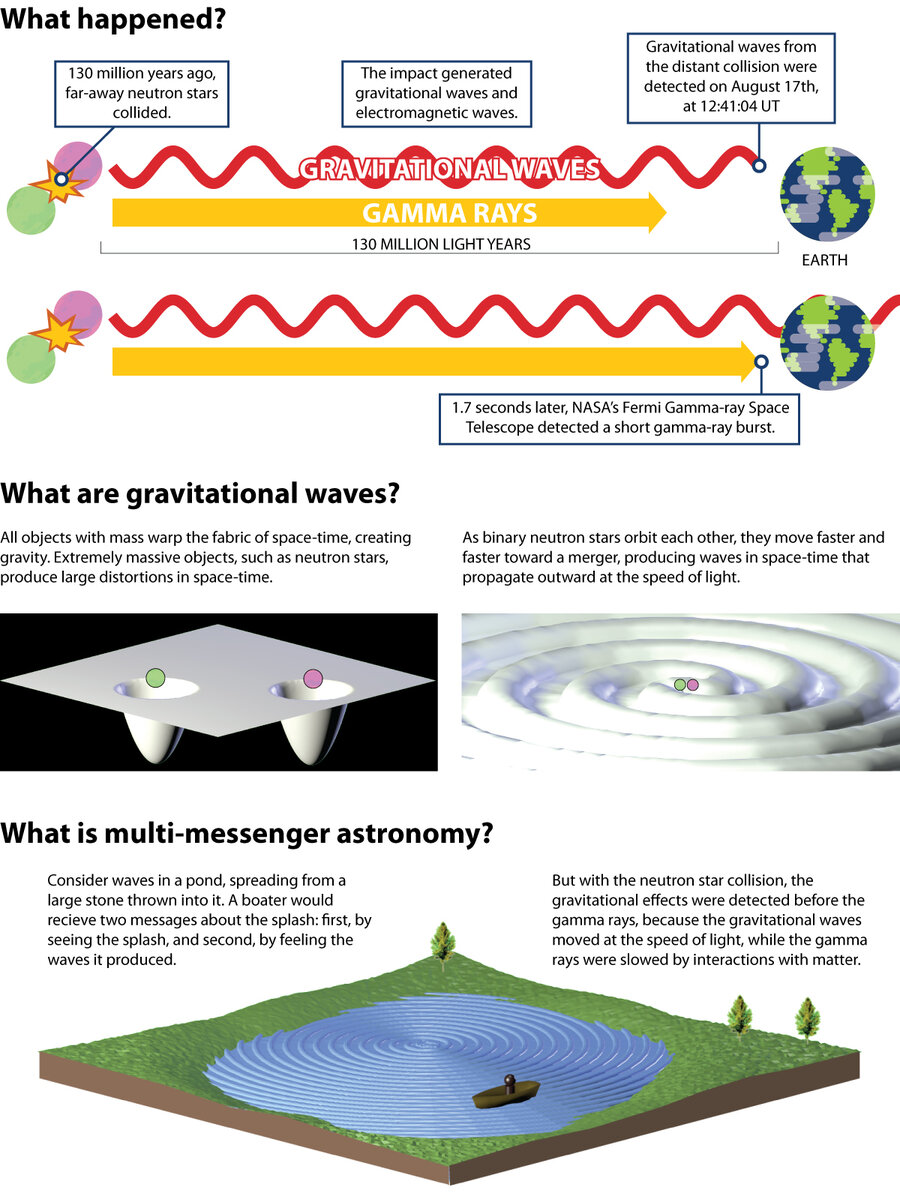
Astronomers have long sought to unravel the universe's mysteries through the medium of light. Now, a collision of neutron stars offers an entirely new way to look at the cosmos.
( 5 min. read )
The Iraqi offensive in Kirkuk offers a glimpse of how far Iraq, Iran, and Turkey will go to prevent the establishment of an independent Kurdish state.聽
( 7 min. read )
How can a victim of a sexual crime begin to heal? Sometimes, by trying to honestly answer a difficult question: How can the guilty person atone for what was done? 聽
( 6 min. read )
Protests during the national anthem have put the National Football League at the center of a divisive national conversation. But what if the NFL could actually find common ground? That's its task this week.
( 2 min. read )
When Woodrow Wilson declared nearly a century ago that any group of people are entitled to 鈥渟elf determination,鈥 he was not very clear on the meaning of 鈥渟elf,鈥 or what is the essential identity needed to bind a nation. That is still the case in two of the world鈥檚 most tension-filled attempts at secession: Kurdistan in Iraq and Catalonia in Spain. After the two regions held contentious votes on independence in the past few weeks, the differences within each region remain almost as large as those with the mother country that opposes a breakup.
The Kurds provide a good example of the need for a people to look beyond a physical or cultural identity in trying to form a new country. As an ethnic minority spread across several Middle East countries, the Kurds have long sought a homeland. They were denied one by the artificial borders drawn for the region by the British and French after World War I and the collapse of the Ottoman Empire.
Yet despite their long-suffering hope, the Kurds still have not resolved their internal divisions over principles of governance, relations with neighboring peoples, or the use of violence. Those differences were on clear display Oct. 16 when Iraqi forces swiftly took back the city of Kirkuk, which the Kurds had controlled since 2014 with the advance of Islamic State (ISIS) in Iraq. One Kurdish faction, called the KDP, fought the Iraqi forces while another, known as the PUK, decided not to resist. The KDP even accused the PUK of assisting the invasion.
It did not help, of course, that the United States and many other countries oppose the Kurdish drive for independence. The defeat of ISIS and support for Iraq鈥檚 fragile government remain the world鈥檚 top priorities. And even though Iraqi Kurdistan voted overwhelmingly for independence on Sept. 25, its people have not shown enough unity to earn backing for statehood.
In Catalonia, the Oct. 1 referendum on independence also exposed divisions over governance and tactics. Only 43 percent of people in Catalonia cast ballots in the vote, hardly a high enough threshold to justify splitting up Spain and sending the European Union into a crisis over micronationalism. In recent days, Barcelona has seen both pro- and anti-secession protests. Polls indicate a preference only for greater autonomy, not a new country.
To form a new country requires a clear 鈥渨e,鈥 one not derived simply from resentment toward others but based on shared values and common social goals. National identity relies on people to show humility and respect toward one another. When French diplomat Alexis de Tocqueville visited the US a few decades after its independence, he noted that America鈥檚 greatness lies 鈥渋n her ability to repair her faults.鈥
Issues of sovereignty are critical in many places, from Scotland to Cameroon. But so is the need for a people to demonstrate harmonious self-governance before seeking the 鈥渟elf-determination鈥 of independence.
Each weekday, the Monitor includes one clearly labeled religious article offering spiritual insight on contemporary issues, including the news. The publication 鈥 in its various forms 鈥 is produced for anyone who cares about the progress of the human endeavor around the world and seeks news reported with compassion, intelligence, and an essentially constructive lens. For many, that caring has religious roots. For many, it does not. The Monitor has always embraced both audiences. The Monitor is owned by a church 鈥 The First Church of Christ, Scientist, in Boston 鈥 whose founder was concerned with both the state of the world and the quality of available news.
( 2 min. read )
Love lost, the end of a friendship, heart-rending news reports 鈥 sometimes we may feel devastated by what鈥檚 going on around us. But as contributor Susan Collins experienced, there鈥檚 a way out of brokenheartedness. God鈥檚 purpose for everyone is good and full of blessings, not sadness or pain. Realizing that we can never be separated from divine Love, our creator, enables us to find genuine peace and a renewed sense of joy 鈥 even when our heart seems most broken.
Thank you for reading. Please come back tomorrow, when we'll look at how the Middle East is coping with the dawning realization that Bashar al-Assad is likely to emerge from the Syrian civil war with his presidency intact.聽