It's no secret that President Trump is sharply at odds with his top advisers. But what does that mean for the direction of US foreign policy?聽
Our name is about honesty. The Monitor is owned by The First Church of Christ, Scientist, and we鈥檝e always been transparent about that.
The church publishes the Monitor because it sees good journalism as vital to progress in the world. Since 1908, we鈥檝e aimed 鈥渢o injure no man, but to bless all mankind,鈥 as our founder, Mary Baker Eddy, put it.
Here, you鈥檒l find award-winning journalism not driven by commercial influences 鈥 a news organization that takes seriously its mission to uplift the world by seeking solutions and finding reasons for credible hope.
About usAlready a subscriber? Log in
Already have a subscription? Activate it
Join the Monitor community.
Subscribe
Marjorie Kehe
When it first opened its doors in 1971, the Ivory Coast鈥檚 Museum of Civilisations in Abidjan was celebrated as one of the richest collections of African art in the world. Sadly during the country鈥檚 civil war in 2011, the museum was brutally looted. About 120 items 鈥 including some of the museum鈥檚 major works and some pieces considered sacred 鈥 were taken.
This month the museum is mounting its first new exhibition since it reopened to the public this summer. The new show is called 鈥淩enaissance鈥 and it will feature 100 of the museum鈥檚 finest remaining pieces.
鈥淲e鈥檙e living through a renaissance 鈥 with cultural and artistic development,鈥 museum director Silvie Memel Kassi told the Agence France-Presse.
Ms. Kassi admitted that it鈥檚 hard not to feel bitter about the museum鈥檚 losses. But museum staff members are focusing on the future, setting aside special spaces to celebrate contemporary artists.
鈥淲e wanted to show that the artists whose creations are today regarded as 鈥榓ncient works鈥 are the very same as Africans producing contemporary work,鈥 says Kassi.
Consider it just one more example of the amazing resilience of the human spirit.
Now for our five stories showing resoluteness, shifts in thinking, and a search for solutions.
Already a subscriber? Log in
Monitor journalism changes lives because we open that too-small box that most people think they live in. We believe news can and should expand a sense of identity and possibility beyond narrow conventional expectations.
Our work isn't possible without your support.
And why we wrote them
( 6 min. read )
It's no secret that President Trump is sharply at odds with his top advisers. But what does that mean for the direction of US foreign policy?聽
( 7 min. read )
There have been so many devastating natural disasters this fall. Are they the result of a changing climate? It's hard to draw a straight line between individual natural disasters and climate change, experts say, but with each disaster comes the opportunity to improve our response.
( 6 min. read )
Will she or won't she? Many Senate-watchers had been holding their breath, wondering if Republican Sen. Susan Collins would be leaving Congress to run for the governor of Maine. Today, many of them heaved a sigh of relief.
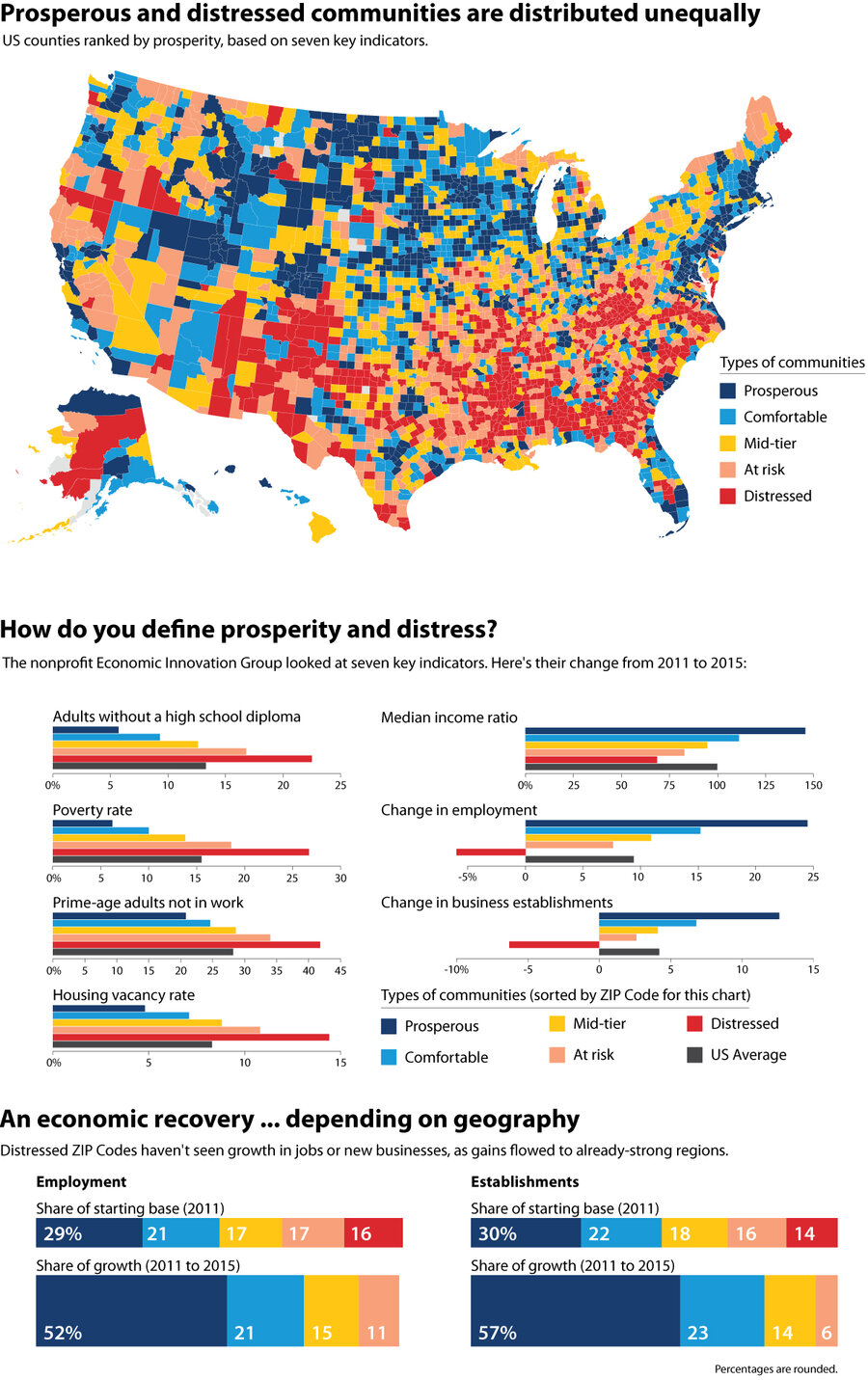
Does America's economic recovery depend ... on geography? Researchers say new solutions and fresh thinking may be needed to ensure a better distribution of wealth throughout the US.聽
( 4 min. read )
Frederick Wiseman鈥檚 voluminously fascinating documentary 鈥淓x Libris鈥 is ostensibly about the New York Public Library system. But, like all of this 87-year- old director鈥檚 best work, it鈥檚 actually about a great deal more.
( 2 min. read )
In what Tehran鈥檚 leaders might call an act of heroic flexibility, President Trump has decided not to blow up a 2015 deal 鈥 as he once promised 鈥 that has so far curbed Iran鈥檚 nuclear program. Mr. Trump now seems persuaded of the strategic reasons to honor the international pact. Instead, in an Oct. 13 speech, he left the issue of whether to scuttle the deal up to Congress and, by default, American public opinion.
But what are Americans to make of the deal now, especially as Iran could again become a nuclear threat? Under the pact, Iran can resume processing uranium in 2031. That 鈥渟unset鈥 provision was the best that the West could do in the negotiations. And it represents a perception among many experts that Iran will not be nearly as dangerous in 14 years.
The deal鈥檚 success depends on deep social trends among Iranians, especially its large population of young people. Through their street protests, thirst for Western culture and ideas, and votes for moderates in rigged elections, they have shown an independence of conscience after living for decades under Muslim clerics who claim a divine right to rule.
As a leading expert on Iran, Ray Takeyh at the Council on Foreign Relations, put it recently:
鈥淭he Iranians have given up not just on the Islamic Republic, but even on religious observance, as mosques go empty during most Shia commemorations. Three decades of theocratic rule has transformed Iran into one of the most secular nations in the world. The middle class and the working poor are equally hard pressed by the regime鈥檚 incompetence and corruption. Even the senior ayatollahs are beginning to realize the toll that has taken on Shia Islam by its entanglement with politics.鈥
And in a recent survey of young clerics in Iran鈥檚 sacred city of Qoms, scholar Abbas Mehregan found 52.5 percent reject the use of violence to guide people to 鈥渞eal鈥 Islam. (One-third do not tolerate religious diversity.)
鈥淭his implies the creation and gradual expansion of a softer interpretation of Shia Islam in Iran,鈥 he writes. 鈥淚n other words, Shia believers have a free choice in the multivocal market of religious ideas.鈥
Such readings of shifts in Iranian society suggest Americans should support the nuclear pact even as the United States and its allies keep Iran in check on other issues, such as the Iranian missile program and the regime鈥檚 support for terrorist groups.
Iranian-style theocratic rule, which is not popular among most of the world鈥檚 Muslims, defies a person鈥檚 capacity to live by the light of reason, faith, and a respect for equality and the opinion of others. A religion must not impose itself by coercion, only by example and peaceful persuasion.
In his speech, Trump spoke at times directly to the Iranian people. It was a wise move, one often done by his predecessors. More Iranians are eager for ideas different than the dictates of unelected theocrats.
Each weekday, the Monitor includes one clearly labeled religious article offering spiritual insight on contemporary issues, including the news. The publication 鈥 in its various forms 鈥 is produced for anyone who cares about the progress of the human endeavor around the world and seeks news reported with compassion, intelligence, and an essentially constructive lens. For many, that caring has religious roots. For many, it does not. The Monitor has always embraced both audiences. The Monitor is owned by a church 鈥 The First Church of Christ, Scientist, in Boston 鈥 whose founder was concerned with both the state of the world and the quality of available news.
( 3 min. read )
When it comes to loving our neighbor, much of the recent rhetoric around the world has reflected just the opposite. But there are also signs of hope and progress 鈥 for instance, the online 鈥淐ompassion Games鈥 movement, which has gained traction around the globe, with profound results. A warden at a high-security women鈥檚 prison approved an 11-day trial of the game that ended up transforming the entire culture of the facility, even leading to the healing of deep emotional wounds. Everyone is capable of feeling and expressing the kind of compassion Christ Jesus taught and lived. A willingness to let infinite, divine Love guide our thoughts and actions 鈥 even when faced with the most entrenched hate 鈥 can heal both mental and physical wounds. This kind of spiritual love for our neighbor is exactly what will begin to break down walls of bigotry.
Thanks so much for joining us. Come back Monday. We're working on a story about how people in a small Texas town have rallied around their high school football team 鈥 and each other 鈥 to help overcome the effects of a disastrous hurricane.