



In Iran, a US win will take more than just claiming victory


U.S. military planners like to say good tactics win battles. And that good strategy wins wars.
By every tactical indicator, the U.S. military has been overwhelmingly successful so far in Iran, destroying targets 鈥渄ecisively鈥� and 鈥渄evastatingly,鈥� as Defense Secretary Pete Hegseth puts it. American forces have leveled roughly 90% of Iran鈥檚 missile capacity, and Iran鈥檚 offensive launches against the United States have dropped off dramatically since the start of operations nearly one month ago, Pentagon officials say.
As the U.S. attacks continue, President Donald Trump announced this week that the administration is in fruitful talks with the Iranian regime. Though leaders in Tehran deny such talks, the U.S. has reportedly delivered a 15-point plan to Iran for ending hostilities that calls for Tehran to abandon its nuclear ambitions and its support for regional militias 鈥� demands that have been rejected by the regime in the past.聽
Why We Wrote This
Despite major tactical successes in degrading Iran鈥檚 military, U.S. forces still confront the challenge of reopening oil trade in the Strait of Hormuz. And Iran鈥檚 regime remains in place.
Should the U.S. and Iran come to an agreement, Mr. Trump might declare victory and try to end the war.
But that will not be the same, defense analysts say, as winning it.
Retired Army Col. Pete Mansoor, professor of military history at The Ohio State University, is reminded of an anecdote from Col. Harry G. Summers Jr.鈥檚 book, 鈥淥n Strategy: A Critical Analysis of the Vietnam War.鈥�
In it, Mr. Summers recounts a conversation with a North Vietnamese colonel at the Paris Peace Accords, which ended the Vietnam War after the fall of U.S.-backed South Vietnam. 鈥淗e said, 鈥榊ou know, Colonel, we never lost a battle,鈥� Professor Mansoor says. 鈥淎nd the North Vietnamese colonel looked at him and said, 鈥榃ell, that may be true, but it is also irrelevant.鈥欌��
As with the North Vietnamese leadership, the Iranian regime has a grip on its country that doesn鈥檛 appear to be greatly affected by the tactical successes of the U.S. and Israeli military campaign being waged against it.
鈥淲e鈥檙e winning tactically and operationally,鈥� says Professor Mansoor, who was the executive officer for Gen. David Petraeus, the commander of U.S. forces during the Iraq War. 鈥淏ut strategically, I鈥檓 not so sure.鈥�
What鈥檚 next
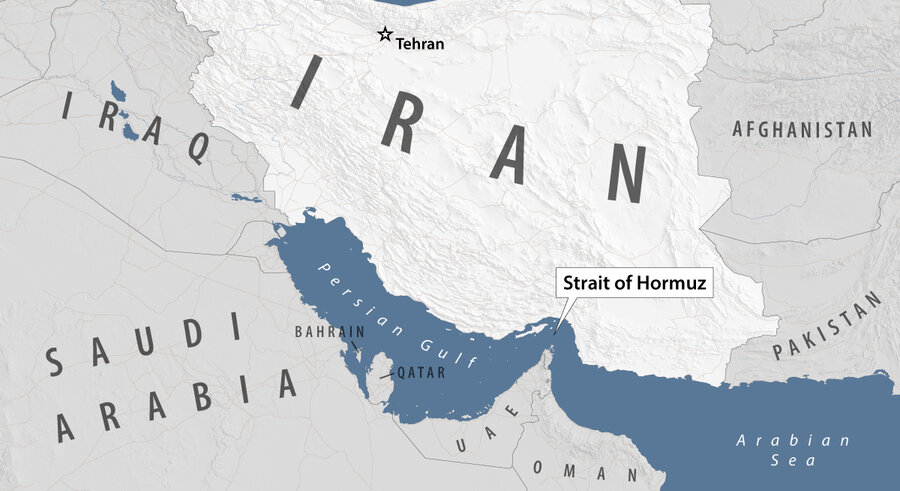
For now, Iran has largely closed the Strait of Hormuz, through which one-fifth of the world鈥檚 oil transits. Should talks with the Iranian regime fall apart again, President Trump could send U.S. troops to try to reopen the waterway, which Iran has threatened to weaponize with explosives.
Some 2,200 Marines are already on their way to the region, and the Trump administration is now sending thousands more,聽including paratroopers with the Army's 82nd Airborne Division, to give the U.S. military options. This could involve occupying Kharg Island in the Persian Gulf to help seize control of Iran鈥檚 oil supply to try to force the regime to reopen the strait.
With its nuclear capabilities in ruins following the 12-day war with Israel (with U.S. support) last year, Iran has had 鈥渙ne big card to play,鈥� in closing the strait, Professor Mansoor says. 鈥淎nd it鈥檚 played it pretty well.鈥�
Iran has laid mines and launched attacks on some 20 vessels transiting the strait. That strategy 鈥渄idn鈥檛 really hit a lot of ships, but it hit enough of them鈥� to close it, Professor Mansoor says.
This is the way of modern warfare, analysts say. Adversaries, particularly less-powerful ones, have become accustomed to waging asymmetric campaigns that can ultimately lead to victory.
It happened in Vietnam and also in Afghanistan, where the U.S., which dominated the skies above the country and had far greater technology, was defeated by the Taliban, which used guerrilla tactics like suicide attacks, roadside bombs, and assassinations as destabilizers.
Today, Iran is also taking a page from Ukraine鈥檚 playbook. 鈥淚ran has done to the U.S. what the Ukrainians did to the Russians in the Black Sea,鈥� says retired Col. Mark Cancian, a defense analyst at the Center for Strategic and International Studies (CSIS).
Without a navy, Ukraine 鈥� using a combination of drone boats and missile attacks to disable one-third of Russia鈥檚 fleet 鈥� has been able to deny Russia the critical Black Sea waterway, just as Iran has done with the Strait of Hormuz.
What constitutes a win?
The U.S. could potentially end the conflict by getting Iran to agree to open the strait unconditionally. 鈥淭hat鈥檚 about as good of a win as you can expect right now,鈥� Professor Mansoor says. 鈥淭he thing is, I don鈥檛 think they鈥檙e going to do that. Their leverage over the strait is the only leverage they have.鈥�
The Iranian regime is likely going to want the U.S. to lift sanctions and maybe even withdraw its forces from the region 鈥渋f they really want to have a stretch goal there,鈥� he adds.
For the U.S., winning the war in Iran would mean either 鈥渕aking Iran so impotent that it no longer has a missile force, a drone force, a navy, or the ability to control the Strait of Hormuz鈥� 鈥� or fomenting regime change, argues Mr. Cancian of the CSIS.
But when it comes to the latter, consensus among U.S. military analysts is that it won鈥檛 happen without U.S. boots on the ground, which would risk additional combat casualties.
Professor Mansoor points to T.R. Fehrenbach鈥檚 鈥淭his Kind of War,鈥� considered a classic in U.S. military academies:
鈥淵ou may fly over a land forever; you may bomb it, atomize it, pulverize it and wipe it clean of life,鈥� Mr. Fehrenbach writes. But to overthrow a regime, 鈥測ou must do this on the ground, the way the Roman legions did, by putting your young men into the mud.鈥�
鈥淚 think that鈥檚 the case here,鈥� in Iran, Professor Mansoor says.

Currently, there are no organized internal forces in Iran willing and able to cooperate with the U.S. to overthrow the regime. While the Kurds, an ethnic group with an armed faction that could mount an attack, were mentioned by U.S. officials in this capacity, 鈥淭hey wisely and flatly opposed doing so,鈥� he says.
Sending in U.S. forces to overthrow the current Tehran regime is a daunting prospect that the Trump administration is unlikely to be considering, analysts say.
鈥淚ran is ringed by mountains, it鈥檚 got extensive deserts 鈥� it鈥檚 hard to get to Iran from really anywhere,鈥� Mr. Mansoor says. 鈥淚t would require a ground force on an order of magnitude greater than what we used in the march to Baghdad in 2003.鈥�
That force, which overthrew Saddam Hussein and sparked a multiyear counterinsurgency fight with the deposed Iraqi military leadership, involved upward of 150,000 U.S. troops at the outset.
The prospect of Iranian regime change
Though regime change doesn鈥檛 appear imminent, U.S. military actions 鈥渕ay bear fruit in the future,鈥� says Donald Heflin, a senior fellow specializing in diplomacy at Tufts University鈥檚 Fletcher School of Law and Diplomacy.
There is now a 鈥渇airly long list of countries that would like to see the Iranian regime change. Now, it includes their next-door neighbors, who are very rich 鈥� and that may be a ticking time bomb for the Iranian regime,鈥� he adds, citing Saudi Arabia, the United Arab Emirates, and Qatar.
These Gulf allies of the U.S. are considering joining the fight against Iran, according to on Tuesday, amid concerns that if the regime survives the heavy U.S. military buildup, it will be more emboldened and ideologically entrenched than ever.
Iran might 鈥渕ake some minor concessions that [Mr.] Trump can dress up as major concessions and declare victory,鈥� Mr. Heflin says. But should that happen, the Iranian regime will still be in power, he adds.
鈥淭hey鈥檙e going to think ... 鈥楾he U.S. and Israel came at us with all they had. And guess what? We鈥檙e still here.鈥欌��
Editor's note: This story, originally published on March 25, was updated on the same day with additional news of U.S. paratroopers deploying to the Middle East and a 15-point plan from the U.S. for ending hostilities.


