海角大神

2026
March
17
Tuesday

Monitor Daily Podcast

March 17, 2026
Loading the player...
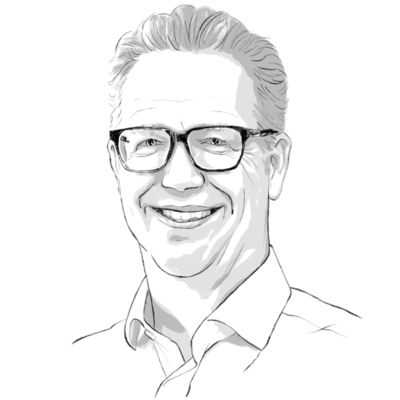
Matthew Bell
International desk editor

President Donald Trump wants international help in the Strait of Hormuz. The vital chokepoint for oil and gas shipments out of the Persian Gulf has been mostly blocked by Iran, and the global economy is already feeling the impact. For those who would refuse Mr. Trump鈥檚 call for assistance, he posted on social media over the weekend, 鈥淲e will remember.鈥

But, so far, the response has been tepid at best. Australia and Japan said no. The United Kingdom says it might send minesweepers to the Gulf. Germany鈥檚 defense minister responded by saying, 鈥淭his is not our war.鈥 So, the waterway that saw one-fifth of the global supply of oil and gas pass through it before the war against Iran remains closed. That鈥檚 one of our top stories today.


You've read  of  free articles. Subscribe to continue.

News briefs

Justices will hear effort to end protected status for Haitians and Syrians. The Supreme Court said it will hear a request from the Trump administration to end a program allowing tens of thousands of Syrians and Haitians to live in the U.S. temporarily. The Temporary Protected Status program bars several thousand Syrians and about 350,000 Haitians from deportation to their homelands because of 鈥渆xtraordinary and temporary鈥 conditions there. The case will be argued in late April.

President Donald Trump asks to delay high-stakes China trip due to Iran war.听Citing his need to oversee the war, Mr. Trump said Monday he wanted to postpone the trip, set to start March 31, for a month. Beijing and Washington are now in talks over the timing, a Chinese Foreign Ministry spokesman said Tuesday.听
Our coverage:Why no one, so far, is rushing to help open Strait of Hormuz

Union workers at a Colorado beef-packing plant began striking Monday. Some 3,800 workers were involved in the first U.S. slaughterhouse walkout in more than 40 years. Employees did not accept a new contract from Brazil鈥檚 JBS, the world鈥檚 largest meatpacker, citing unfair labor practices, unsafe conditions, and low wages. This occurs amid record-high beef prices, driven by the smallest cattle herd in 70 years. Ground beef averages $6.70 per pound. In early 2026, grocery prices increased 3% overall, but beef prices jumped 20%.

The Kennedy Center board voted to close the facility for two years. The John F. Kennedy Center for the Performing Arts 鈥 Washington鈥檚 premier cultural venue 鈥 will close for two years beginning July 6, at President Donald Trump鈥檚 urging, following a unanimous vote Monday by its board of trustees. Mr. Trump, chairman of the board, has ordered a major renovation. Last year, after the president took over as chair and appointed ally Richard Grenell to head the center, many artists canceled performances.
Our coverage: How Donald Trump is upending American culture

Uganda鈥檚 leading opposition leader fled the country. Robert Kyagulanyi Ssentamu 鈥 better known as Bobi Wine 鈥 announced he had fled the country after two months of hiding. Mr. Wine alleged fraud after his loss in January鈥檚 presidential election to Yoweri Museveni, who has ruled Uganda for four decades. Since then, the pop-star-turned-politician says he has feared for his life. Mr. Wine did not say where he had gone, but promised in a video posted to X he would eventually return home.
Our coverage: On election day, Ugandan youth weigh stability versus possibility

Georgia city cuts utilities at a proposed ICE facility.听City officials in Social Circle, Ga., said Monday they would deny water and sewer services to a new 鈥渕egacenter鈥 unless they receive more information from U.S. Immigration and Customs Enforcement. Officials are concerned about 鈥渆xceeding our limited infrastructure capacity.鈥

Major world cities made strides against air pollution. Nineteen of them, including Beijing, London, San Francisco, and Poland鈥檚 capital Warsaw, showed reduced levels of fine particulates and nitrogen dioxide from 2010, according to Breathe Cities, the Clean Air Fund, and C40 Cities. Some reductions exceeded 40%. Reductions in coal-powered heating and a rise in electric transport were among factors cited.

鈥 Compiled by Monitor writers around the world


Today’s stories

And why we wrote them

Efrem Lukatsky/AP
An instructor from the Ukrainian company General Cherry demonstrates the operation of an anti-air interceptor drone designed to destroy Russian attack drones in the Kyiv region of Ukraine, March 11, 2026.

Iran has shown they can do a lot of damage to United States and Israeli assets 鈥 and regional allies in the Gulf 鈥 via missile and drone attacks. But one country can offer its deep experience on how to counter such a blitz: Ukraine.

Lee Jin-man/AP
Protesters shout slogans against President Donald Trump's request to multiple countries to send warships to keep the Strait of Hormuz open, near the U.S. Embassy in Seoul, South Korea, March 16, 2026.

President Donald Trump鈥檚 appeal for help reopening the Strait of Hormuz, the vital Persian Gulf shipping lane that Iran has closed, has received a cool reception from U.S. allies that feel mistreated and weren鈥檛 consulted before Mr. Trump鈥檚 decision to go to war.

J. Scott Applewhite/AP
Sen. Markwayne Mullin speaks with reporters on the steps at the Capitol, March 5, 2026.

A leadership change is underway at the Department of Homeland Security at a critical time for the agency. Republicans are counting on Oklahoma Sen. Markwayne Mullin, a former wrestler and plumbing business owner, to navigate pressures including a loss of government funding.

The Explainer

In the Senate, Democrats are in the minority but can stand in the way of the SAVE America Act. Republicans, despite pressure from President Donald Trump to pass the bill, don't appear likely to take advantage of the talking filibuster听鈥 even though some in their party are pushing to do so.听

In Pictures

Paloma Laudet
MOVING IN HARMONY: B-Boy Issa (on the ground) trains outside his home while his siblings and other children watch. 鈥淒ance is my only hope in life,鈥 he says.

Economic insecurity and a violent conflict fueled by the resurgence of the M23 armed rebel group have racked the city of Goma. But the children there have found a lifeline in dance.


The Monitor's View

Benoit Tessier/Reuters
Tankers sit in the Strait of Hormuz, March 7.

More than material weapons might sway the war in Iran. As both Washington and Tehran are finding out, allies that would come to your assistance probably prefer to first share your values and not just mutual interests.

On Saturday, President Donald Trump put out a call to seven countries to send ships to defend the vital oil-shipping lanes in the Strait of Hormuz. The response has been largely halting 鈥 at best, hesitant. The international uncertainty over the legal premise for the U.S.-Israeli attacks on Iran is probably a hindrance to those nations in risking their military to protect petroleum flows. 鈥淭his is not our war; we did not start it,鈥 said Boris Pistorius, Germany鈥檚 defense minister.

For Iran, two of its most powerful partners, China and Russia, are largely playing a minor role in the conflict. In Gaza, Hamas has asked Iran not to attack its neighboring Gulf states, saying that the regional countries should cooperate 鈥渢o preserve the bonds of brotherhood.鈥 In Iraq, the pro-Iran Shiite militias are largely staying quiet, preferring to preserve their moneymaking enterprises. Only Hezbollah in Lebanon, a key part of Iran鈥檚 鈥淎xis of Resistance,鈥 has again come to Iran鈥檚 aid by attacking Israel 鈥 much to the regret of Lebanese citizens who have felt the Israeli retaliation.

In times of conflict, ties between nations that are based on trust, respect, and rules of conduct can help restore peace, not to mention prevent a war. Such partnerships, especially if codified into international law, thrive on transcendent principles with universal appeal, such as political freedom or religious values that teach compassion and forbearance.

鈥淭he thing to recognize about international law is that when it鈥檚 most powerful, it鈥檚 actually pretty invisible. It shapes what you consider to be the available options in ways that you don鈥檛 really even notice because it鈥檚 so fundamental,鈥 Oona Hathaway of Yale Law School told the Carnegie Endowment for International Peace. Most countries are not invading their neighbors, she points out, a simple fact about global norms that receives very little attention in the news.

Under the current Trump administration, the official national strategy report calls for 鈥渞ealism,鈥 not 鈥渃loud-castle abstractions like the rules-based international order.鈥 In Iran, too, a revolution once based on Islamic principles 47 years ago has descended into regime survival, even to the point of killing thousands of Iranians during just two days of protests in January.

The war in Iran could turn on how much either side adheres to practices widely accepted by humanity, or what Ms. Hathaway calls 鈥減rinciples that people believe in.鈥

鈥淚f you need allies, if you鈥檙e fighting really dirty, you鈥檙e going [to] have a much harder time getting ... other states to support you,鈥 she stated.

The near collapse of the international order set up after World War II now requires a creative rethink, she suggests. The war in Iran could be the contest that helps define new rules 鈥 in place of the ones now vanishing 鈥 that would still be able to end wars and preserve peace.


A 海角大神 Science Perspective

About this feature

Each weekday, the Monitor includes one clearly labeled religious article offering spiritual insight on contemporary issues, including the news. The publication 鈥 in its various forms 鈥 is produced for anyone who cares about the progress of the human endeavor around the world and seeks news reported with compassion, intelligence, and an essentially constructive lens. For many, that caring has religious roots. For many, it does not. The Monitor has always embraced both audiences. The Monitor is owned by a church 鈥 The First Church of Christ, Scientist, in Boston 鈥 whose founder was concerned with both the state of the world and the quality of available news.

As we鈥檙e conscious of God鈥檚 presence, not letting ourselves get distracted, we鈥檙e revitalized and healed.


Viewfinder

Carlos Avila Gonzalez/San Francisco Chronicle/AP
Londyn, left, and Rae dig in the sand at Alameda South Shore Beach in Alameda, California, March 15, 2026. A heat advisory was in effect in the Bay Area 鈥 the first ever that far north in March 鈥 though temperatures there were expected to retreat from the 80s to the mid-50s at night. The advisory鈥檚 area extended far down through the Central Coast and into Southern California and was expected to persist this week.
( The illustrations in today’s Monitor Daily are by Jacob Turcotte. )

More issues

2026
March
17
Tuesday

Give us your feedback

We want to hear, did we miss an angle we should have covered? Should we come back to this topic? Or just give us a rating for this story. We want to hear from you.