Many Republican lawmakers came out strongly against the violent siege on Jan. 6, but most saw impeachment of President Trump as inflaming rather than stifling the passions behind the violence.
Our name is about honesty. The Monitor is owned by The First Church of Christ, Scientist, and we鈥檝e always been transparent about that.
The church publishes the Monitor because it sees good journalism as vital to progress in the world. Since 1908, we鈥檝e aimed 鈥渢o injure no man, but to bless all mankind,鈥 as our founder, Mary Baker Eddy, put it.
Here, you鈥檒l find award-winning journalism not driven by commercial influences 鈥 a news organization that takes seriously its mission to uplift the world by seeking solutions and finding reasons for credible hope.
About usAlready a subscriber? Log in
Already have a subscription? Activate it
Join the Monitor community.
Subscribe
Howard LaFranchi
The other day I read a commentary about this moment, which also brought me back to 1992. Moroccan international expert Ahmed Charai聽said that events of Jan. 6 in the strength of America鈥檚 democracy. But he then said he cried when, just hours after the assault on the U.S. Capitol, Congress was back and the sitting vice president read the votes confirming his own loss and his opponent鈥檚 victory. That, this writer said, is the America he still believes leads the world by example.
Where does 1992 fit in? I happened to be in Morocco on a reporting trip that year in November, and the U.S. Embassy invited me to an election night party.
First, Bill Clinton鈥檚 victory became clear. Later, President George H.W. Bush came on the TV screens with his family. Around me in the ballroom, people were chatting, backs to the screens, like nothing was going on. Then a man near me said something I鈥檒l never forget (and which I wrote about): He turned to his chatty group and said, 鈥淗ey, you all need to watch this. The most powerful man on Earth is about to acknowledge his loss, and that he鈥檒l respect the will of the people and leave power quietly. It鈥檚 a lesson much of the world needs to learn.鈥
America has stumbled, no doubt about it. But when Mike Pence read the victorious votes for the Biden-Harris team, it was still an example for parts of the world where such transitions, even frighteningly flawed ones, don鈥檛 occur. Remembering that nearly three-decade-old experience gave me some hope.
Already a subscriber? Log in
Monitor journalism changes lives because we open that too-small box that most people think they live in. We believe news can and should expand a sense of identity and possibility beyond narrow conventional expectations.
Our work isn't possible without your support.
And why we wrote them
( 7 min. read )
Many Republican lawmakers came out strongly against the violent siege on Jan. 6, but most saw impeachment of President Trump as inflaming rather than stifling the passions behind the violence.
( 6 min. read )
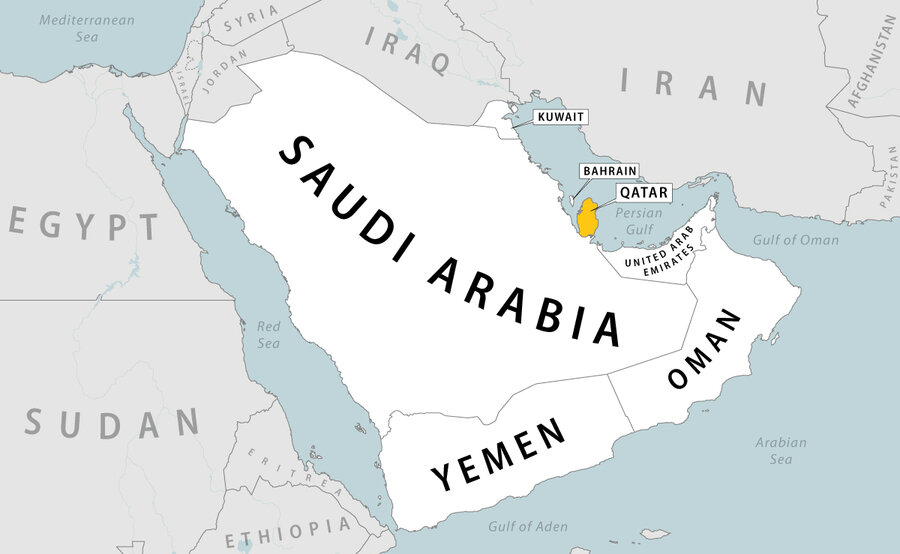
What price political principles? When the Saudis punished Qatar for its policies, it came at a personal and economic cost for residents of the whole region. Reconciliation and cooperation are now in the offing.
( 4 min. read )
Around the globe, pandemic restrictions have sometimes served as pretext for repression. Elections raise especially urgent issues of how to protect a fair vote, while also protecting voters.
( 3 min. read )
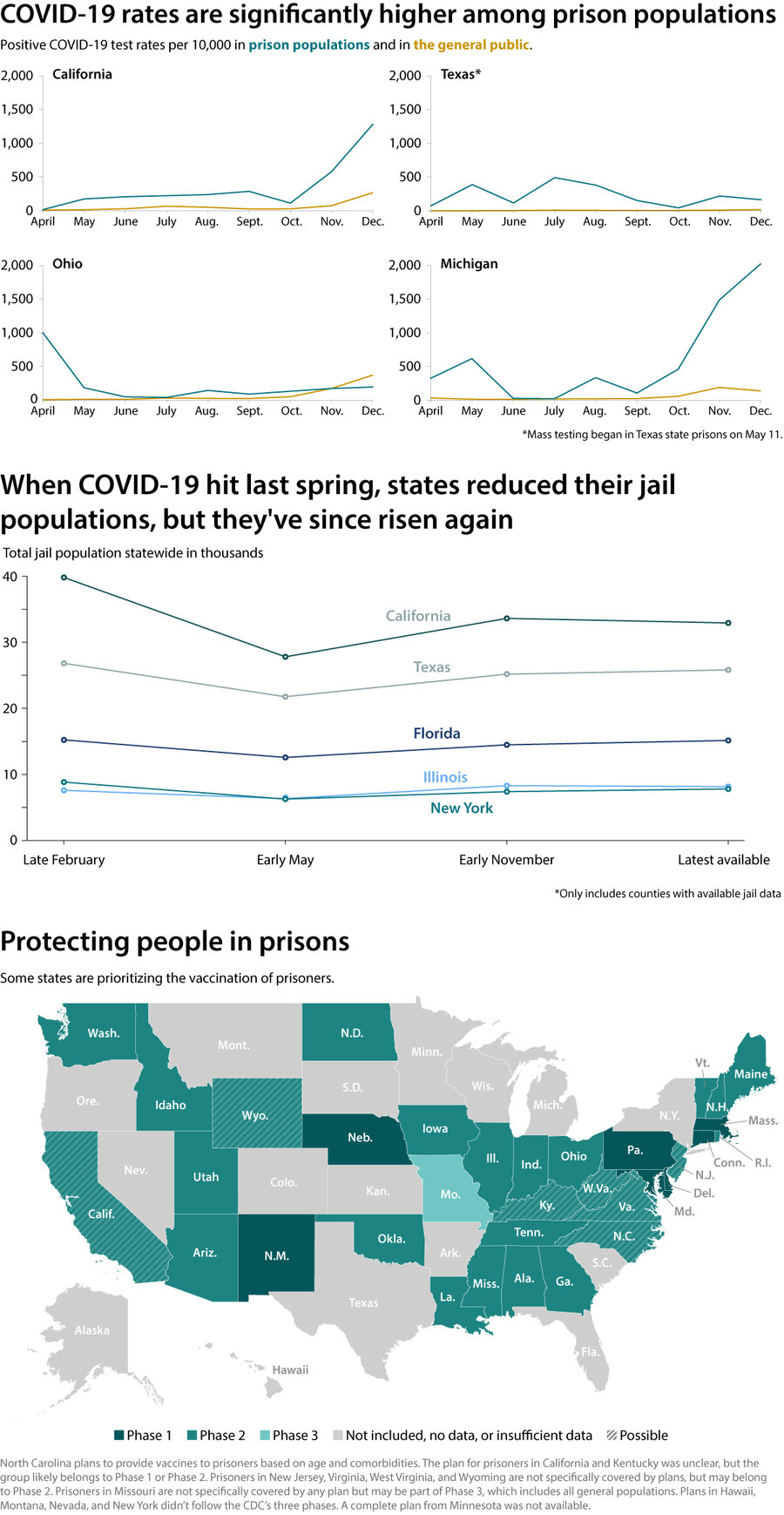
Understanding how the coronavirus threatens the lives of prisoners and prison officers is crucial to combating its spread and to safeguarding incarcerated people.聽
( 5 min. read )
In the training kitchen at Emma鈥檚 Torch, refugees earn more than culinary skills. They begin to carve their own path to the American dream.
( 3 min. read )
Argentina embarked this week on a dramatic process of redemption. It is dropping all criminal charges and annulling all convictions against women who either terminated or lost their pregnancies. The move follows passage last month of a landmark bill legalizing abortion. It is expected to become law within days, making Argentina only the third country in Latin America to give women full control over their reproductive decisions.
The new law reflects shifting priorities and attitudes across Latin America coinciding with the growing role of women in government and civic affairs. When he proposed the abortion bill, President Alberto Fern谩ndez acknowledged 鈥渁 dilemma鈥: 鈥淭he criminalization of abortion is of no use. It has only allowed abortions to occur clandestinely in troubling numbers.鈥 But his motives were more than pragmatic. The government, he argued, had an obligation to care for all its citizens regardless of their personal decisions.
The new law is catching up to an often-unrecognized reality: Women have been at the forefront of social movements in Latin America for decades. During the last military regime in Argentina, from 1976 to 1983, women whose husbands and children disappeared at the hands of the state formed a protest movement that radically transformed traditional attitudes toward women and motherhood. 鈥淭o be a mother became more than caring for and educating children,鈥 noted Cec铆lia Sardenberg at the Federal University of Bahia in Brazil. 鈥淚t also meant defending their rights.鈥
That ideal endures in the social movements led by women in Latin America today. In 2012, for example, Camila Vallejo led university students in Chile in protests of government funding of education. She is now a member of Congress. In Argentina, 42% of senators and 39% of deputies (serving in the lower legislative chamber) are women. In Bolivia, women make up 52% of parliament. Mexico last year made gender parity a requirement in all three branches of government.聽
It is unclear how many women in Argentina will benefit from the decision to drop criminal punishment for terminated pregnancies. But even partial numbers indicate the extent of the harm done. Since 2012, when the last reforms were enacted, allowing abortion only in cases of rape or when the woman鈥檚 life was endangered, an estimated 38,000 illegal abortions have been performed annually. According to a study by the Center for Legal and Social Studies (CELS) in Buenos Aires published last month, more than 1,500 women in 12 of 23 provinces faced criminal liability in some form for losing a pregnancy through either abortion or miscarriage.
The cost of strict abortion bans in Latin America is severe. In Argentina alone, an estimated 3,000 died of unsafe procedures since 1983. Poor women were disproportionately affected. As the CELS study notes, women suffering from the effects of bad procedures were often turned away by medical professionals. Even women who suffered miscarriages were subject to prison, abuse, and stigmatization.
Explaining her vote in favor of the bill, Sen. Nora del Valle Gim茅nez said, 鈥淚 choose to see the thousands of young people who are calling on us to pass this law and join in the consolidation of democracy 鈥 who demand ... to participate in the construction of a country with less exclusion, more equality, and more rights.鈥
In societies where women have long been seen more as symbols of 鈥渢he stability and continuity of the race,鈥 as the Mexican writer Octavio Paz put it, than as individuals in their own right, Argentina has signaled a profound shift. Through a recognition of the dignity and worth of women, democracy is being renewed.聽
Each weekday, the Monitor includes one clearly labeled religious article offering spiritual insight on contemporary issues, including the news. The publication 鈥 in its various forms 鈥 is produced for anyone who cares about the progress of the human endeavor around the world and seeks news reported with compassion, intelligence, and an essentially constructive lens. For many, that caring has religious roots. For many, it does not. The Monitor has always embraced both audiences. The Monitor is owned by a church 鈥 The First Church of Christ, Scientist, in Boston 鈥 whose founder was concerned with both the state of the world and the quality of available news.
( 4 min. read )
An avid student of political science, a young man was certain his future would include a law career and possibly public service. But the more he learned about 海角大神 Science, the more he was drawn to practicing a different kind of law 鈥 God鈥檚 healing law of goodness.
Thanks for joining us today. Tomorrow, our stories will include a look at a security risk exposed by the mob who stormed the U.S. Capitol last week: that extreme views on politics and race reach into the ranks of police officers and government workers.