All Science
 First LookNewly discovered particle outshines protons, neutrons with double the charmHowever fleeting it may be, the discovery of a long theorized baryon is news for celebration in the physics community. 聽
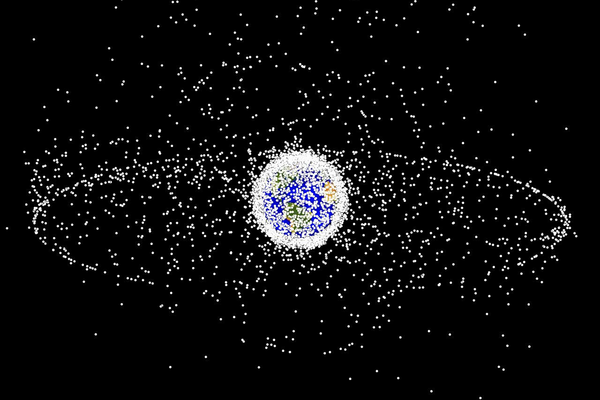 As space junk soars, science turns to nature for ideasEven if we stop launching rockets today, cascading collisions between orbiting objects will continue to endanger satellites. But this sticky problem might have an even stickier solution: gecko-inspired trash grabbers.
 How information overload helps spread fake newsMathematical modeling of social networks reveals how misinformation finds its way to the top 鈥� and offers clues for how to dampen the spread of false information.
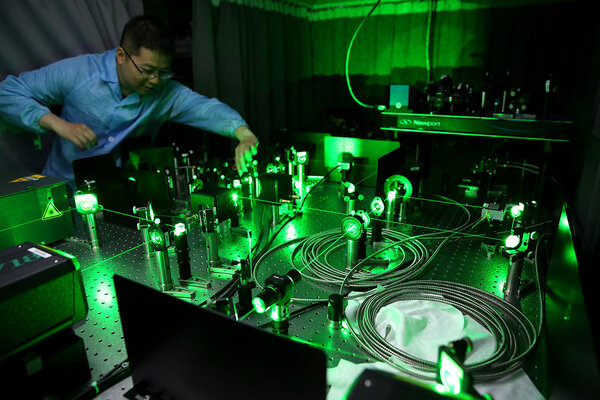 Unbreakable: China doubles down on quantum internetChina has set a new distance record for photon entanglement, the foundation for a communications network secured by the code to end all codes.
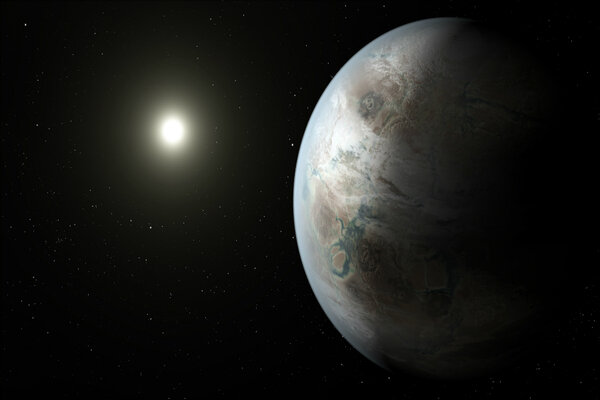 First LookKepler telescope discovers new batch of 'just right' planets that could foster lifeNASA's planet-hunting telescope offers up even more evidence that Earth-like planets orbiting sun-like stars are 'not rare.'
 First LookNew study shows ancients cats traveled the world with their human ownersIn a groundbreaking study, researchers traced genetic signatures of cats 鈥� some 9,000 years old 鈥� back to the Middle East, with feline DNA resembling some modern-day breeds.聽
 Understanding why loneliness exists can help ease it, say scientistsNew research that examines the vicious circle of social isolation also points to the evolutionary origins of loneliness, and a way for people to escape it.
 Just how Earth-shattering are those 300,000-year-old Homo sapiens fossils?It may seem like an astonishing revision of our species' history to add 100,000 years, but to paleoanthropologists trying to piece together a messy evolutionary picture, that's a good day on the job.聽
 Can female mentors patch the leaky STEM pipeline?A two-year study found that 100 percent of women engineering students with female mentors stuck with the program, a surprising win in a field with a traditionally high attrition rate.
 Can the world come together in defense of oceans?Leaders from 193 nations convene in New York this week for聽the first-ever UN Ocean Conference to share ideas, make voluntary commitments, and issue a 'call for action' in defense of the world's seas.
 First LookIndia surges in space race as its most powerful rocket launches satellite into orbitThe successful launch of the GSAT-19 satellite, the heaviest聽India聽has attempted to put in orbit yet, is being heralded as the nation's next step toward broader launch capabilities.
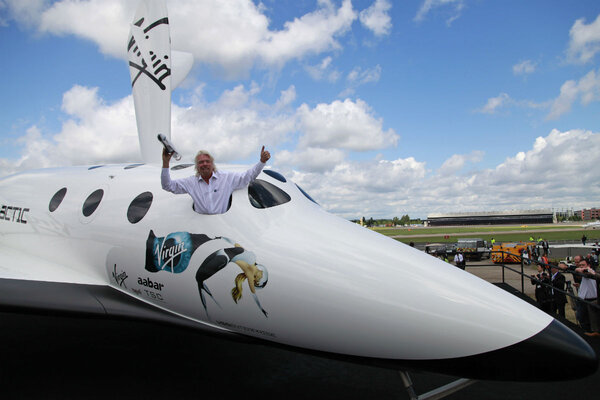 Where are all the space hotels? Why smart people make terrible forecasts.Virgin Galactic is in good company when it comes to aerospace organizations over-promising on their ability to deliver new technology, suggesting that accurate project management may actually be harder than rocket science.聽
 NASA's Parker Solar Probe: a mission six decades in the makingNamed for pioneering physicist Eugene Parker and scheduled to launch next summer, the probe will plunge into the sun's corona in hopes of revealing clues about one of our solar system's most enduring mysteries.聽
 How Trump's budget could affect basic researchThe White House's 2018 budget proposal includes deep cuts to research and development that could aggravate what many see as an ongoing crisis in the country's research apparatus.聽
 First LookProbe spots massive cyclones at the poles of JupiterThe nature and scale of the storms are causing scientists to rethink what they thought they knew about the gas giant.
- First LookProbe spots massive cyclones at the poles of JupiterThe nature and scale of the storms are causing scientists to rethink what they thought they knew about the gas giant.
 First LookUnusual test rocket successfully launches from New Zealand, but doesn't make orbitRocket Lab is the company behind the launch. The Electron rocket is smaller and lighter than most rockets, and boasts an electric engine.
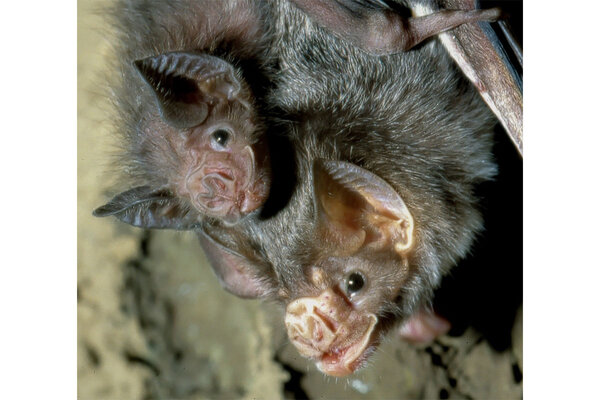
- What vampire bats can teach us about cooperationNew research reveals that vampire bats with wide social networks tend to better cope with the loss of a close relative.聽
 First LookHow did whales get so big?Millions of years ago, whales went from merely big to massive. Now, a group of researchers think they know how these gentle giants got so gigantic.
 First LookCritical repairs completed on International Space StationA relay box had to be replaced by astronaut Peggy Whitson after it abruptly failed.