The Supreme Court鈥檚 suddenly blockbuster term


A lot can change in two weeks.
Entering its Christmas break, the U.S. Supreme Court was in a familiar place. One opinion had been issued in the to the term. The highest-profile cases 鈥� touching issues like gun rights, taxation, and government regulation 鈥� had been argued. A routine term seemed in the cards, a boon for a high court coming off historic rulings in consecutive terms and now entering a divisive election year.聽
A fortnight later, the Supreme Court is in a much less comfortable position. Over the next four months, the justices will hear cases with mammoth implications for both the 2024 election and one of the central issues of that election: abortion access.
Why We Wrote This
The word 鈥渦nprecedented鈥� gets tossed around a lot. But the Supreme Court is suddenly finding itself asked to decide cases with no legal precedent to fall back on. And the rulings are likely to affect the 2024 election.
The term 鈥渉as taken on tremendous weight that was not evident at the start,鈥� says Carolyn Shapiro, co-director of the聽Chicago-Kent College of Law鈥檚 Institute on the Supreme Court of the United States.
鈥淥n the other hand, it鈥檚 not entirely unpredictable we find ourselves in this situation,鈥� she adds.
Indeed, legal questions involving former President Donald Trump have been looming since the Jan. 6, 2021, insurrection. Similarly, the landmark rulings of recent years 鈥� such as overturning Roe v. Wade 鈥� were always likely to prompt follow-up cases.
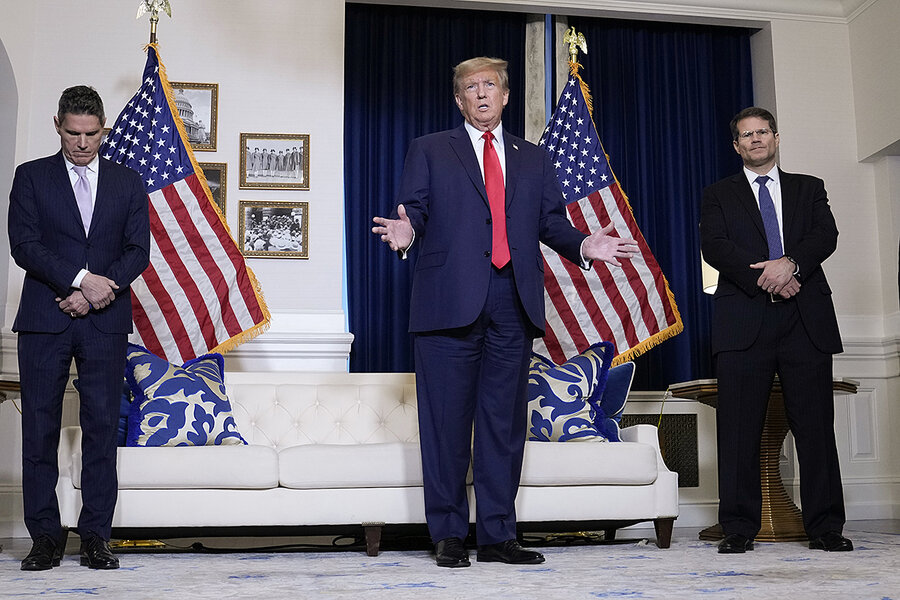
On Tuesday, Mr. Trump鈥檚 legal team asked three judges at the聽U.S. Court of Appeals for the District of Columbia Circuit to declare that a president who had not first been impeached by the House and convicted by the Senate was immune from criminal prosecution. In an exchange that raised legal eyebrows from coast to coast, Mr. Trump鈥檚 attorney asserted that this would hold true even if a president ordered the assassination of a political rival. The justices declined to hear the case before the appeals court weighs in, but聽it seems all but certain the Supreme Court will be asked to聽decide the issue.
And even if the justices saw it coming, they are now facing six months of political scrutiny, compressed timelines, and unprecedented legal questions. However they rule, they鈥檙e certain to anger a segment of the country and sow further distrust in their judicial integrity. And when voters head to the polls in November, the rulings are likely to be fresh in their minds.
November鈥檚 ballot, on the docket
Public confidence in the Supreme Court stayed last year following consecutive terms in which the six-justice conservative supermajority overturned Roe v. Wade, struck down affirmative action, and ruled that the Second Amendment protects the right to carry a firearm in public.聽
Republicans, unsurprisingly, have a view of the court than other Americans. But that confidence could be tested by the end of this term.
In February, the justices will hear a challenge to a ruling by the Colorado Supreme Court that the 14th Amendment disqualifies Mr. Trump from running for public office because he 鈥渆ngaged in insurrection鈥� on Jan. 6. Then there is the question of whether the Constitution gives a president immunity from criminal prosecution after they leave office.
The court has indirectly affected elections over the years, including through decisions reshaping the Voting Rights Act and campaign finance laws. But not since Bush v. Gore in 2000 will the Supreme Court have such a significant influence on a presidential election.
鈥淭he legal questions are different [from Bush v. Gore], and the impacts of the outcomes would be much less direct,鈥� says Ilya Somin, a professor at George Mason University鈥檚 Antonin Scalia Law School.
But the 14th Amendment and immunity cases, he adds, 鈥渃ould have a significant indirect impact on the election, and that鈥檚 going to be on people鈥檚 minds.鈥�
Abortion rights, redux
Meanwhile, abortion rights has been in political campaigns since the Supreme Court overturned Roe in June 2022. Over the next six months, the court will be dealing with the fallout from that decision.
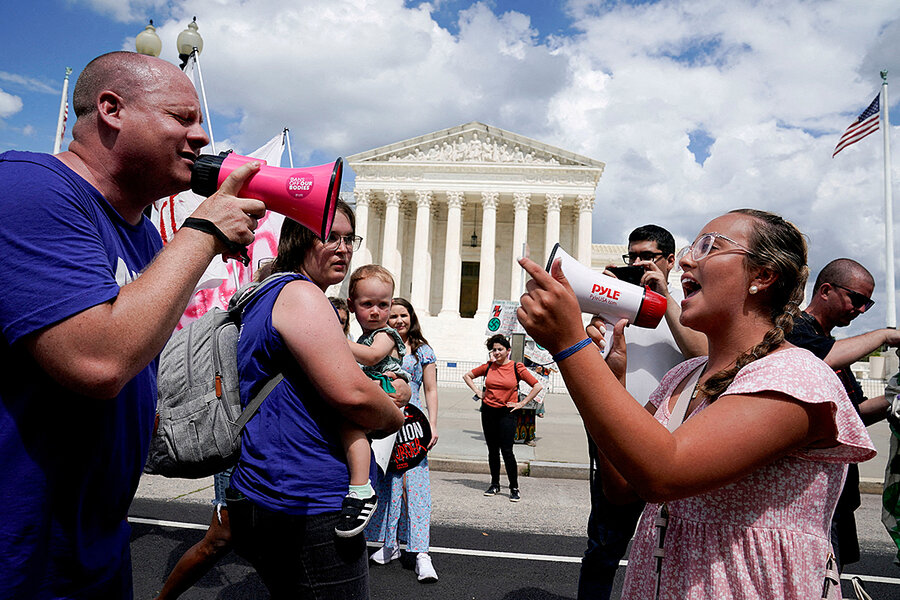
In mid-December, the court agreed to hear a case challenging the federal authorization of the widely used medical abortion pill mifepristone. And last week, the justices took up a case asking if Idaho鈥檚 near-total abortion ban conflicts with a federal law requiring health care providers to perform abortions for certain emergency room patients.
The Idaho case will be argued in April. The court hasn鈥檛 yet scheduled arguments in the mifepristone case. That the justices are again wrestling with this hot-button political issue 鈥渋s not surprising either,鈥� says Professor Shapiro.
鈥淲hen the court [overturned Roe], it was setting itself up to be adjudicating extremely divisive and important issues regarding health care access for years to come,鈥� she adds.
The regularly scheduled program
All these cases only add to what was already a substantial, albeit lower-profile, Supreme Court docket.
In a follow-up to a landmark gun-rights ruling in 2022, the justices will decide if laws barring domestic abusers from possessing firearms are unconstitutional. The high court will also decide if the federal government can no longer tax certain 鈥渦nrealized鈥� income. That decision could have consequences for other sections of the U.S. tax code, as well as for the $340 billion that the specific tax at issue is projected to raise over the next decade.
Finally, the justices could also overturn the Chevron doctrine. The 40-year-old precedent, which holds that federal courts must defer to an agency鈥檚 interpretation of ambiguous laws, plays a major role in the regulatory process. But conservatives have long argued that Chevron gives federal agencies too much unchecked authority, and several justices have openly criticized the doctrine.
Guns, taxes, and Chevron made for a significant but low-key start to this Supreme Court term. After the past two weeks, however, the term has taken on the weight of historic significance 鈥� on a par with those that outlawed segregation and effectively ended Richard Nixon鈥檚 presidency after Watergate.
鈥淚鈥檓 struggling to think of any term in which the court will have decided a larger number of massively important cases,鈥澛犅燬teve Vladeck, a University of Texas School of Law professor, on X, formerly known as Twitter.
鈥淚t鈥檚 a court that is spending most of its time right in the middle of our political wars.鈥�