Even as the U.S. tallies record national debts, we look at why some economists have shifted their views about the dangers of big debt. At least, for now.
Our name is about honesty. The Monitor is owned by The First Church of Christ, Scientist, and we鈥檝e always been transparent about that.
The church publishes the Monitor because it sees good journalism as vital to progress in the world. Since 1908, we鈥檝e aimed 鈥渢o injure no man, but to bless all mankind,鈥 as our founder, Mary Baker Eddy, put it.
Here, you鈥檒l find award-winning journalism not driven by commercial influences 鈥 a news organization that takes seriously its mission to uplift the world by seeking solutions and finding reasons for credible hope.
About usAlready a subscriber? Log in
Already have a subscription? Activate it
Join the Monitor community.
Subscribe
David Clark Scott
It wasn鈥檛 the waitress鈥檚 fault. But she bore the cost.
At each table in the Glenbrook Brewery in Morristown, New Jersey, there is a sign that says seating is limited to 90 minutes due to COVID-19 capacity restrictions 鈥 currently at 50% in the state. It鈥檚 a common practice. Time limits allow restaurants to turn over as many tables as possible in hopes of making a profit. In the U.S., an estimated 聽during the pandemic.
After an $86 meal for four last Friday, a disgruntled Glenbrook patron left no tip for his server, a nurse in graduate school working more than one job. Scrawled on the receipt: 鈥淒on鈥檛 kick paying customers out after 90 minutes.鈥澛
But the story doesn鈥檛 end there. When a聽photo of the receipt with the word 鈥渮ero鈥 on the tip line was posted on a community Facebook page聽by a waitress from another establishment, folks responded. A local business owner started collecting tips 鈥 nearly $2,000 鈥 for the stiffed server.聽
, the kind comments, just the things people say bring me to tears,鈥 the waitress, Beth (she didn鈥檛 give her last name), told NBC New York. She plans to share 20% of the total with her fellow servers, and give the rest back to the community.
The natural response to injustice is compassion, empathy, and a desire to help.聽
Nicely done, Morristown.
Already a subscriber? Log in
Monitor journalism changes lives because we open that too-small box that most people think they live in. We believe news can and should expand a sense of identity and possibility beyond narrow conventional expectations.
Our work isn't possible without your support.
And why we wrote them
( 5 min. read )
Even as the U.S. tallies record national debts, we look at why some economists have shifted their views about the dangers of big debt. At least, for now.
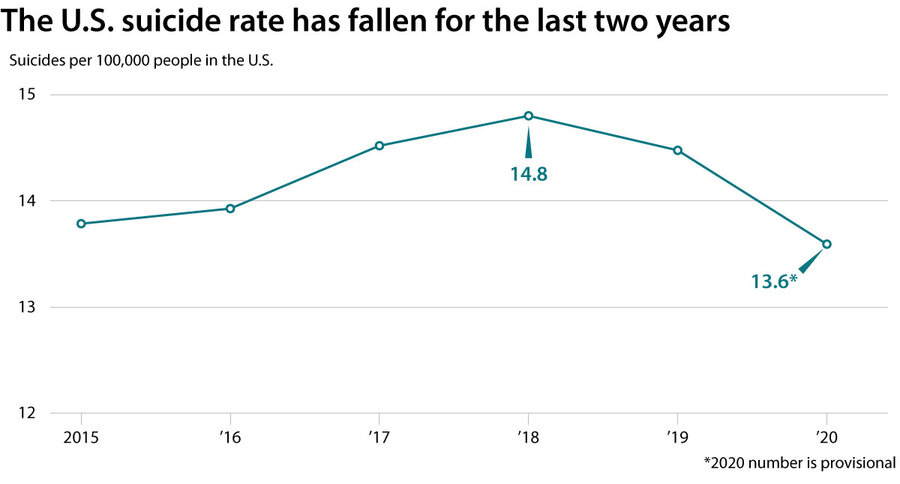
We like to explore the unexpected. In this case, amid all of the challenges of the pandemic, and dark forecasts, here鈥檚 some light: The U.S. suicide rate this past year took a turn for the better.
( 6 min. read )
What does a national experiment in giving all children 鈥 regardless of family income 鈥 free meals at public schools look like? The pandemic offers us a live test of what works, or doesn鈥檛.
( 4 min. read )
The University of Texas has been swept up in the nation鈥檚 racial reckoning. We look at the challenge of embracing unity today with an official song that鈥檚 seen as a cherished tradition and, by some, as divisive.
( 6 min. read )
As master falconer, who grew up in the city, he鈥檚 an empathetic teacher who knows personally the value of second chances 鈥 and聽 how humans can learn about trust from birds of prey.
( 2 min. read )
A favorite research topic among economists is whether countries are able to improve their tax collection, especially in curbing legal tax avoidance (鈥渓oopholes鈥) by citizens and corporations. The former Soviet state of Georgia, for example, was recently commended by the International Monetary Fund for a rapid rise in tax revenue. Its reform, said the IMF, required 鈥渇irst and foremost a broad social and political commitment.鈥
Soon this topic could be global. On April 7, the finance ministers of the world鈥檚 wealthiest nations (the Group of 20) said they hope to agree by mid-2021 on a way to prevent one of the most common tax-avoidance schemes: corporations shifting their profits or legal identity to a low-tax country, or even a no-tax 鈥渉aven鈥 like the Cayman Islands.
In theory, the G-20 endorsed a global minimum corporate tax rate that might prevent such 鈥渢ax shopping鈥 鈥 and the resulting competition among nations to lower their tax rates. Agreeing on a specific rate, however, could be difficult, as would enforcing it. Many countries now do legal somersaults to lure foreign investment.
The G-20鈥檚 move was made easier by a decision last week from the Biden administration. A minimum rate would help 鈥渕ake sure the global economy thrives based on a more level playing field,鈥 said Janet Yellen, President Joe Biden鈥檚 treasury secretary and a former head of the Federal Reserve. With such a global standard, President Biden hopes American corporations will keep more of their money in the United States, thus funding his ambitious spending plans.
The idea of a global tax rate has gained in popularity because of the rapid globalization of commerce as well as the rise of digital companies that can easily operate across borders. And with the pandemic draining government budgets, countries are even more eager to find new revenue. On April 6, the IMF鈥檚 managing director, Kristalina Georgieva, called on political leaders to 鈥渃ollect taxes more effectively.鈥
Much of the groundwork in finding a consensus on corporate taxation has been done by the Organization for Economic Cooperation and Development, a club of mostly rich countries that helps set global norms. Not to be outdone, the United Nations issued a report in February that looked at the 鈥済aps, loopholes and shortcomings鈥 in how countries finance themselves. While offering dozens of recommendations, the report said tax abuse arises from a 鈥渨eakness of social contracts鈥 and 鈥渋ncentives that divert taxpayers (both corporate and individual) away from society鈥檚 goals.鈥
While countries need greater transparency and enhanced accountability in tax collection, stated the U.N. report, all people in a country must contribute 鈥渢owards financial integrity in all aspects of their lives.鈥
Corporations might seem like abstract entities, but they are made up of individuals who can live up to that goal. If the G-20 agrees on global rules for taxation, it might raise the bar on tax integrity. Perhaps then avoiding a tax bill, even if done legally, might seem outside the bounds of a country鈥檚 social contract.
Each weekday, the Monitor includes one clearly labeled religious article offering spiritual insight on contemporary issues, including the news. The publication 鈥 in its various forms 鈥 is produced for anyone who cares about the progress of the human endeavor around the world and seeks news reported with compassion, intelligence, and an essentially constructive lens. For many, that caring has religious roots. For many, it does not. The Monitor has always embraced both audiences. The Monitor is owned by a church 鈥 The First Church of Christ, Scientist, in Boston 鈥 whose founder was concerned with both the state of the world and the quality of available news.
( 3 min. read )
When nagging concerns about her ability and worth reared their head, a woman found confidence and inspiration from the realization that God has given us all the intelligence, love, and ability we need.
Thanks for joining us. Come back tomorrow. We鈥檙e working on a story about New Hampshire鈥檚 annual 鈥渋ce out,鈥 a sign of spring, and climate change.