All Science
 The space shuttle named by Star Trek fans makes its final voyageThe space shuttle Enterprise arrived in New York City at its new home on the flight deck of an aircraft carrier, now named the Intrepid Sea, Air & Space Museum.
 Space Shuttle Enterprise arrives in New York. Where will the other shuttles go?Like the Space Shuttle prototype Enterprise, which is now on the聽flight deck of the Intrepid Sea, Air &聽Space聽Museum in New York City,聽NASA's three real聽space聽shuttles聽鈥� the ones that rocketed into orbit 鈥� also will spend their retirement in museums.
 Venus transit offers opportunity to study planet's atmosphereThe transit of Venus across the face of the sun Tuesday offered astronomers a chance to examine the dense atmosphere of Earth's 'sister planet.'聽
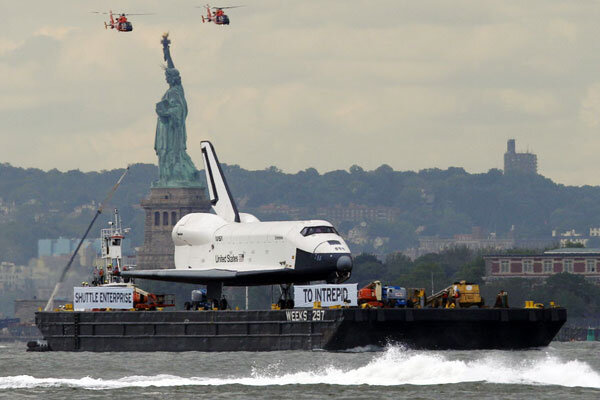 Space shuttle Enterprise arrives at New York's Intrepid museumNASA awarded Enterprise to the Intrepid in April 2011. At the same time, the space agency assigned the museum homes for its space-flown orbiters.
 As prehistoric birds emerged, giant insects departedAs the first birds took to the skies about 150 million years ago, huge insects started to decline, say scientists.聽
 Why don't mosquitoes get squashed by raindrops? Scientists find an answer.A mosquito getting hit by a raindrop is equivalent to a human getting hit by a car, but the insects have evolved a way to roll with it.聽
 Dinosaurs actually weren't that heavy, finds studyA comparison of dinosaur skeletons with those of living mammals suggests that the ancient reptiles were tens of tons lighter than previously believed.聽
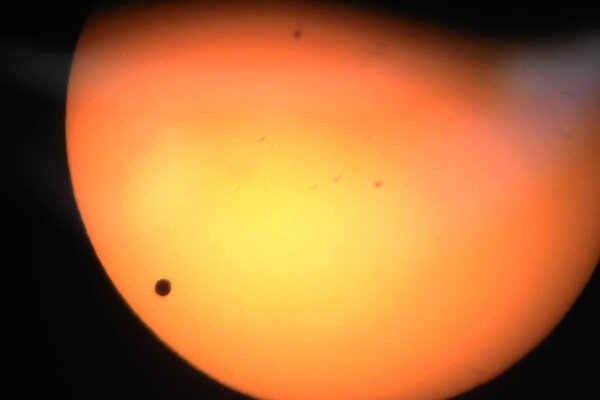 Transit of Venus: Skywatchers rejoice in rare space eventAround the world on Tuesday, civilians and scientists alike took advantage of the rare transit of Venus across the sun.
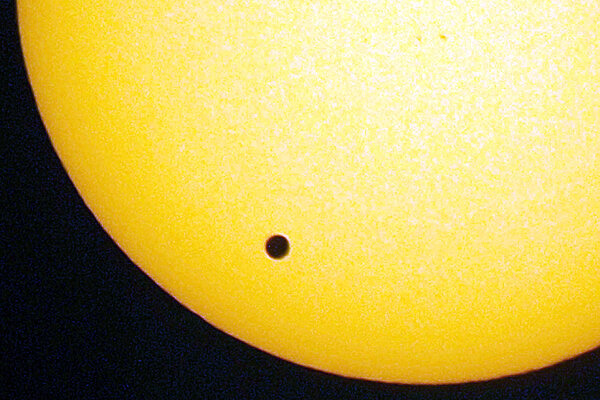 Venus transit 2012: a chance to test Earth-hunting techniquesVenus's 2012 transit across the sun will let researchers test methods for observing Earth-like planets light years away. It's an opportunity that won't be available again until December 2117.
 Transit of Venus: What to expectVenus will cross the face of the sun for the last time until 2117. Here's what it will look like.聽
 Spy agency bequeaths two satellites to NASA, free of chargeThe National Reconnaissance Office is giving NASA two spare space telescopes free of charge, each potentially more powerful than the Hubble Space Telescope.
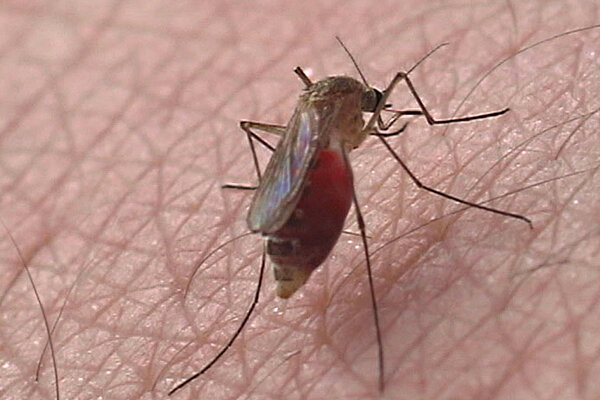 How military might benefit from study of hard-to-kill mosquitoesMosquitoes, it turns out, are surprisingly adept at surviving collisions with heavy raindrops, an ability, say researchers, that could help engineer a new generation of tiny flying drones.
 Scientists create artificial DNA moleculeScientists have聽successfully聽created a pair of DNA nucleobases, which, like聽adenine, guanine, cytosine, and thymine in natural DNA, can copy themselves nearly as well as the real thing.聽
- How to watch the transit of Venus without blinding yourselfThe transit of Venus across the solar disk won't make it okay to stare into the sun. Here's how to watch this rare astronomical event safely.聽
 How to watch the transit of Venus with a pair of binocularsIf you're assuming you can just stare at the sun through a pair of binoculars, you'd better read this.聽
 Transit of Venus offers rare opportunity to mock astronomersIn the past, the transit of Venus has been used as an occasion to poke fun at globetrotting scientists, who used the rare astronomical event to make measurements of our solar system.聽
 NASA space shuttle embarks on voyage to New JerseyThe space agency's original prototype orbiter, Enterprise is scheduled to arrive at the Intrepid Sea, Air & Space Museum on the west side of Manhattan on Tuesday.
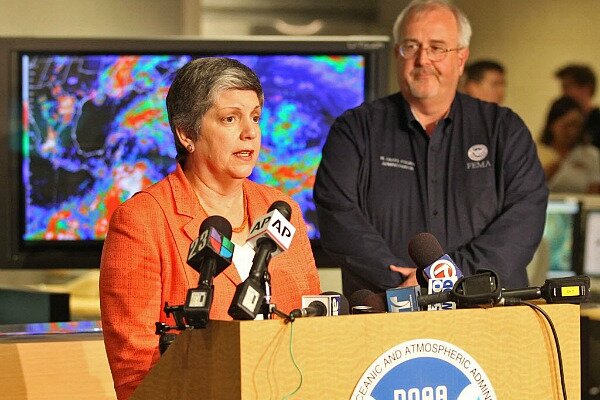 Hurricane season looks to be near-normal this yearSeveral factors are contributing to the near-normal hurricane outlook. Among them, sea-surface temperatures in regions where the Atlantic's tropical cyclones form, and conditions in the tropical Pacific that have an extended influence over weather patterns elsewhere.
 What the transit of Venus tells us about alien planetsThe transit of Venus will help astronomers on the hunt for planets outside of our solar system.
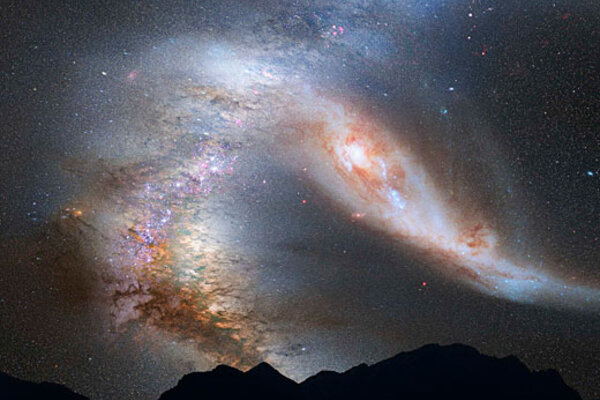 Galactic slam: Milky Way to hit nearby galaxy 鈥� in 4 billion yearsThe collision between the Milky Way and the nearby Andromeda galaxy will result in a single, enormous new elliptical galaxy, but not for another 6 billion years, researchers say.