All Science
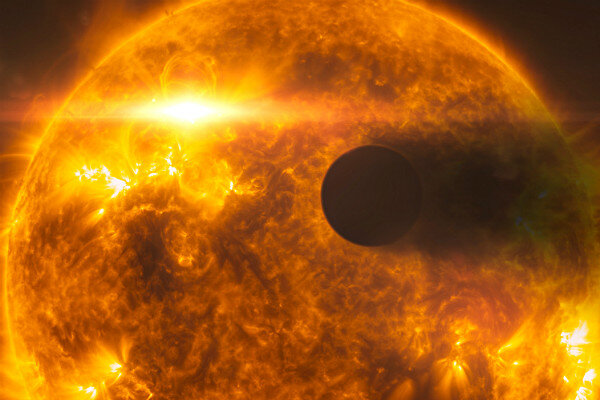 Astronomers spot planet with boiling atmosphereA planet roughly the size of Jupiter is spewing a huge plume of gas, an eruption caused by activity on its parent star.聽
 Why is the sun's atmosphere hotter than its surface? Maybe it's those huge plasma tornadoes.Scientists may have an answer to one of the sun's greatest mysteries: Why is the sun's atmosphere some 300 times hotter than its surface?
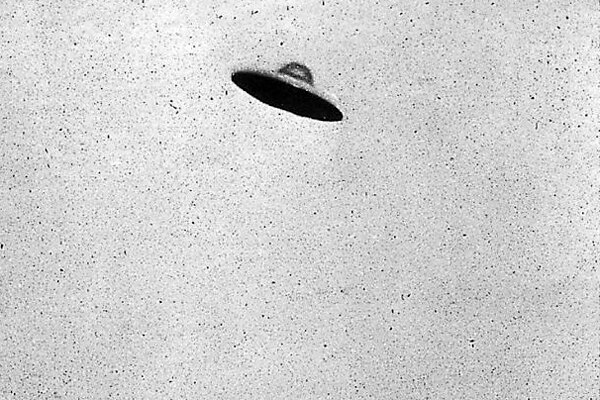 More than one third of Americans believe aliens have visited EarthTo the question of whether they believe aliens have visited Earth, 36 percent of Americans who were surveyed said they do, 48 percent aren't sure, and 17 percent said they don't believe so.
 First-ever deep-space telescope to hunt dangerous asteroidsThe private space telescope forms the heart of Project Sentinel, a deep-space mission being unveiled today in Mountain View, Calif., by a nonprofit group of scientists and explorers that advocates better space rock monitoring.
 Astronomers use an old trick to open new window on extrasolar planetsTwo teams of astronomers used a technique for finding extrasolar planets to directly measure one such planet. The approach could allow the study of more exoplanets' atmospheres than ever before.
 Were dinosaurs warm blooded? The bones point to yes.Studies of growth lines in bones cast into doubt聽the belief that dinosaurs were cold-blooded,聽researchers聽say.聽
 Robot beats human at rock, paper, scissors. Every time.Apparently what most of us had assumed was an innocent game of chance, an equitable way of say, determining who gets to ride shotgun, is actually a computational problem that can be measured, analyzed, and, if your'e a robot with a high-speed camera and lightning-quick motors, mastered.聽
 New method reveals atmosphere on 'Hot Jupiter'Using a ground-based telescope to probe exoplanet atmospheres, which were visible only聽when illuminated by stars, scientists say they hope to study much cooler planets.
 'Family Guy' creator Seth MacFarlane donates Carl Sagan's papers to Library of CongressSeth MacFarlane聽said that the papers belonging to the astronomer and popularizer of science Carl Sagan were extremely influential to him, and that they should be accessible to everyone.
 We are descended from bark chewers, 2 million-year-old fossil revealsBy analyzing teeth and carbon remains from isotopes from fossil specimen Australopithecus sediba, German scientists discovered early humanity chewed bark.
 7 trillion degrees Fahrenheit: Atom-smashing physicists break temperature recordAn atom smasher at Brookhaven National Laboratory聽has attained a Guinness World Record for highest manmade temperature, generating heat that is 250,000 times warmer than the sun.
- 1969 meteorite yields material previously unknown to scienceA new study of fragments of an ancient rock that fell to Earth in 1969 has yielded a new mineral. Dubbed 'panguite' the new mineral may hold secrets about the formation of our solar system.聽
 Girls in science: Gender gaps still persist in STEM subjectsGirls in science and other STEM subjects 鈥� technology, engineering, and mathematics 鈥� are underrepresented compared to boys despite the progress made in the 40 years since Title IX was signed into law.
 Panguite: Ancient mineral newly discoveredStudy of a 1969 fireball meteorite has unearthed a new mineral, named panguite. This mineral was likely around when the solar system formed, billions of years ago.聽
 Astronomers find humongous galaxy cluster, thanks to gravitational lensingUsing NASA's Huble Space Telescope, astronomers have detected a huge cluster of galaxies some聽10 billion light-years away. The cluster is so massive that it聽distorts light that passes near it.聽
- Students set new human-powered helicopter flight recordA team of University of Maryland engineering students built a human-powered helicopter that flew for 50 seconds, getting close to the 60 seconds required to win the $250,000 Igor Sikorsky Prize.
 What causes the '7 minutes of terror' in Mars Rover landing?The NASA's Mars Science Laboratory Curiosity Rover, a mobile robot for investigating Mars's present or past ability to sustain microbial life, is due to land on August 5, almost nine months after its launch.
 Condors threatened by 'epidemic' lead poisoning from hunters' bulletsA review of more than 1,154 blood samples taken from wild California聽condors聽and tested from 1997 to 2010 found that 48 percent of the birds had聽lead聽levels so high, they could have died without treatment.
 Sea level in Northeastern US rising more than three times faster than global averageRecords revealed faster rates of sea-level rise both globally and for the East Coast. Rates are expected to continue increasing as global warming continues.
 Where's Mars? Look for the moon first.Less than four months ago, Mars shone much brighter than today. Now spotting the Red Planet requires guideposts, such as the moon.聽