What鈥檚 ethical for undercover operatives? Anti-hate group entered gray zones.

-
 Patrik Jonsson Staff writer
David Gletty has wrestled alligators to prove his bona fides to extremists. He once shot up an empty Florida nightclub to deter an anti-racism event, to the delight of his FBI handlers. And as a solid roller skater, Mr. Gletty, a paid informant, performed on a roller derby TV show while investigating alleged tax fraud by the show鈥檚 producers.
This week鈥檚 indictment against the Southern Poverty Law Center, on charges of and promoting hate, centers on its use of informants such as Mr. Gletty.
Since at least the 1960s, paid informants have been used not just by local and federal law enforcement but also by nonprofits across the political spectrum. These groups, including the SPLC, a well-known civil rights advocacy group, use such informants to build civil cases against extremist groups such as the Ku Klux Klan.
Why We Wrote This
The Trump administration鈥檚 charges against the Southern Poverty Law Center highlight concerns about how informants operate within extremist groups.
Now, new charges by the U.S. Justice Department are challenging this practice and raising hard questions about the craggy ethical landscape traversed by those who slip in and out of the nation鈥檚 criminal underworld.
鈥淚 did a lot of illegal things to get legal results,鈥� says Mr. Gletty, a retired private detective and the author of 鈥淯ndercover Nazi.鈥� 鈥淪ometimes, good people have to do bad things with bad people to keep bad people from doing bad things to good people. You鈥檒l never go pig hunting without getting mud on you.鈥�
The handed down earlier this week by an Alabama grand jury alleges that the SPLC committed money laundering and bank fraud. But it also suggests that the organization was involved in fomenting hate via paid informants, even as it investigated that hate.
For years, conservatives and some Trump administration officials have accused the SPLC of unfairly labeling mainstream conservative, 海角大神, and immigration-reduction groups as 鈥渉ate groups.鈥�
This week鈥檚 indictment marks the escalation of those accusations into legal action. The SPLC has countered the charges 鈥� and the Justice Department investigation 鈥� as a false, politically motivated attack.
When the line blurs
Regardless, the case raises questions about the extent to which hidden actors working for institutions can 鈥� or should 鈥� shape major events. And when violence occurs, who is accountable?
The indictment also underscores the Trump administration鈥檚 turnabout on American extremism. Long focused on the American right, law enforcement, at the urging of the White House, is now focusing on left-wing extremism.
鈥淎re these charges just purely politically motivated, or is there a legitimate sort of issue to flag here?鈥� says Javed Ali, a public policy professor at the University of Michigan and a former FBI official.
Politics aside, rules regarding how undercover agents operate, especially within extremist or violent groups, matter, he says.
The FBI pioneered the use of paid informants in the 1960s, when they were used to infiltrate the Civil Rights Movement. The SPLC took up the practice in the 1970s to build civil cases against the Ku Klux Klan, a group whose secrecy and ties to local law enforcement made traditional outside investigation nearly impossible.
The FBI has worked with the SPLC in the past, but scaled back ties in 2014 during the Obama administration following criticism of the group鈥檚 objectivity. It then severed ties completely last year when FBI Director Kash Patel declared the anti-hate group 鈥渦nfit for any FBI partnership.鈥�
But unlike nonprofit groups such as the SPLC, the FBI operates under a national mission with clear guidelines established in 1976.
鈥淭he FBI follows the law and policy when we use confidential sources for investigations into criminal activity,鈥� says a statement to the Monitor from the FBI鈥檚 Washington press office. 鈥淧rivate organizations do not have those same rigorous policies and guidelines and do not work on behalf of the American public.鈥�
The F鈥檚
According to the indictment, SPLC has used what it calls 鈥渢he Fs,鈥� or field sources, often paid through straw bank accounts. Such accounts are typically opened by one person but used by another, often for money-laundering, fraud, or tax-evasion reasons.
鈥淔-37,鈥� the indictment alleges, helped plan the 2017 鈥淯nite the Right鈥� rally in Charlottesville, Virginia. Between 2015 and 2023, that operative was paid more than $270,000 through straw bank accounts.
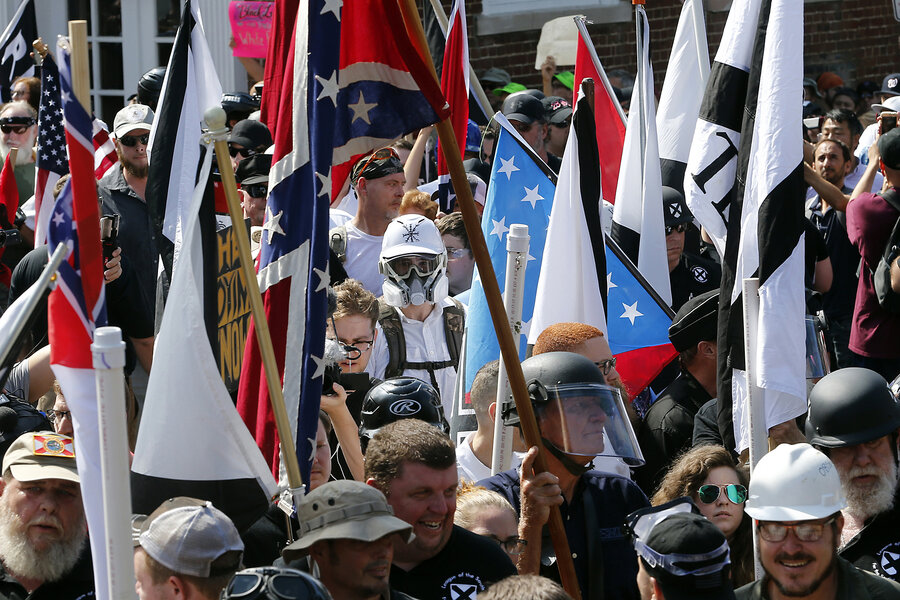
Another source, or agent, 鈥淔-9鈥�, served the SPLC for 20 years, banking more than $1 million. At one point, the indictment alleges, the source stole and photocopied 25 boxes of materials that became part of a series on the SPLC鈥檚 鈥淗atewatch鈥� website.
鈥淔-unknown鈥� was the Imperial Wizard of the United Klans of America, it says.
The SPLC 鈥渨as not dismantling these groups,鈥� acting U.S. Attorney General Todd Blanche said on Tuesday. 鈥淚t was instead manufacturing the extremism it purports to oppose by paying sources to stoke racial hatred.鈥�
The law center鈥檚 chief executive, Brian Fair, has denied wrongdoing and said the payments went to informants to monitor the threat of violence from extremist groups. He says the information those informants provided has helped save lives. But he added that the group no longer uses paid operatives.
Given the inherent dangers of that work, Mr. Fair has said, discretion by undercover informants isn鈥檛 about deception but about necessity.
鈥淲e know the risks for people advocating for vulnerable populations,鈥� says Philip Hackney, a law professor at the University of Pittsburgh, who studies nonprofit organizations. 鈥淚t鈥檚 death.鈥�
As an FBI informant, Mr. Gletty says he was paid as much as $2,000 per week. He would lead events to gather evidence against members, he says. But he would also force people he considered innocent to leave the groups, sometimes to the consternation of his FBI handlers.
Undercover work is a 鈥渘ecessary evil,鈥� says Mr. Gletty. But there鈥檚 ample room for corruption and wrongdoing, he adds. In his case, he knew that he could face possible arrest by the FBI if he didn鈥檛 act with care or stay within agreed-upon boundaries.
There are other inherent ethical quandaries for informants. In 2022, USA Today reported that the FBI had hired Joshua Caleb Sutter as an informant and paid him more than $140,000 to infiltrate far-right extremist organizations. While on the bureau鈥檚 payroll, Mr. Sutter, a former neo-Nazi, also sold books glorifying child abuse, rape, and mass murder.
鈥淭he SPLC was doing the same thing for good and turning over any stuff they got to the FBI,鈥� Mr. Gletty says. 鈥淏ut [for nonprofits] there鈥檚 also another purpose: to raise money for themselves. They say, 鈥楲ook at the bogey monster we鈥檙e taking on.鈥� But they are part of the monster.鈥�
Charlie Kirk鈥檚 murder: A pivot point
The SPLC was founded as a public service law firm in 1971 in Montgomery, Alabama. It used inside information to fuel civil lawsuits that bankrupted large Ku Klux Klan groups while spreading chaos and fear among their membership. A group of its targets firebombed its original headquarters.
But as the SPLC grew in stature and wealth 鈥� it has some $800 million on hand, twice what it had in 2016 鈥� the organization turned its gaze to the broader American 鈥渉ard right,鈥� as it calls it, through publications like 鈥淗atewatch,鈥� which often includes investigative expos茅s culled from informants.
The SPLC鈥檚 focus on the hard right came at a time when white nationalists and neo-Nazi gangs carried out most extremist violence.
But that work, aimed at the right, also included more mainstream organizations, including anti-immigration groups. It had warned about Turning Point USA, whose leader, Charlie Kirk, was fatally shot at an event in Utah last year. Billionaire entrepreneur Elon Musk posted on X last year that the SPLC was 鈥済uilty of incitement to murder Charlie Kirk.鈥�
The assassination attempt on Donald Trump in 2024 has fueled his current administration鈥檚 willingness to take a harder look at left-leaning organizations that, in its view, foment hate against conservatives.
鈥淭here has, in fact, been a shift and diversification with respect to extremist violence in the U.S., particularly last year,鈥� including the rise of left-wing and jihadist extremist acts, says Brian Levin, founding director of the Center for the Study of Hate and Extremism in San Bernardino, California.
鈥淭hat being said, this administration has used that diversification as a cudgel to improperly focus on the hard left in the absence of other types of extremists.鈥�
The charges against the SPLC are the first of their kind, and the case could be tough to prove given the political dynamics.
鈥淚s the evidence that good?鈥� says Professor Ali at the University of Michigan. 鈥淲e鈥檝e seen DOJ cases in the last year kind of fall apart once they get to the judge.鈥�
Actors behind the scenes
The allegations against the SPLC put events like Charlottesville, but also the Jan. 6, 2021, attack on the Capitol, in a new light, says Mr. Gletty.
The public might never know how and by whom the events they watch on TV are guided. And for operatives, it means they often have to judge who has criminal intent and who is simply an innocent bystander.
鈥淚t鈥檚 a herd mentality, that鈥檚 the thing,鈥� says Mr. Gletty, who, as an operative, has emceed neo-Nazi events from stages in Florida 鈥� to his mother鈥檚 horror, he adds.
鈥淵ou鈥檙e like, 鈥榃ow, this is free, this is the United States, the doors are open.鈥� But there are other actors behind the scenes.鈥�
A courtroom, he says, might be the right way to address those dynamics 鈥� or at least show Americans how the government and nonprofits operate behind the scenes. In the end, he adds, the question remains: Do the ends justify the means?
鈥淭here鈥檚 the legal side of the law, there鈥檚 the wrong side of the law,鈥� says Mr. Gletty. 鈥淎nd there鈥檚 a middle line, and how wide is that line?鈥�