State vaccination programs reflect political and cultural values. Florida has found early success by rooting its COVID-19 vaccine rollout in simplicity.
Our name is about honesty. The Monitor is owned by The First Church of Christ, Scientist, and we鈥檝e always been transparent about that.
The church publishes the Monitor because it sees good journalism as vital to progress in the world. Since 1908, we鈥檝e aimed 鈥渢o injure no man, but to bless all mankind,鈥 as our founder, Mary Baker Eddy, put it.
Here, you鈥檒l find award-winning journalism not driven by commercial influences 鈥 a news organization that takes seriously its mission to uplift the world by seeking solutions and finding reasons for credible hope.
About usAlready a subscriber? Log in
Already have a subscription? Activate it
Join the Monitor community.
Subscribe
Mark Sappenfield
Ahmed doesn鈥檛 ask for much. Maybe some walls for his bombed-out school in Yemen. Windows would be nice, too, so he doesn鈥檛 get wet when it rains, he smiles. But 9-year-old Ahmed doesn鈥檛 complain. Even though he is blind, he鈥檚 too busy teaching the younger kids when the adults on staff (who are not paid) can鈥檛 show up. He likes the Quran and science, .听
Every day in Yemen, kids like Ahmed are starving. A civil war has spiraled out of control as Saudi Arabia and Iran use Yemen to wage a battle for regional influence. The children of Yemen are the greatest losers as the combatants weaponize hunger and misery. Yet those children still go to school. Yet Ahmed still teaches amid the wreckage. Still, they hope.听
The lack of global help is says Jan Egeland of the Norwegian Refugee Council. But how can we help Ahmed? Aid is one way, certainly. The Biden administration has also stopped supporting Saudi military operations in Yemen. That鈥檚 a 鈥済ood thing,鈥 Mr. Egeland adds.
But just as vital, he says, is to help those involved see the needless brutality of a senseless war. There can be a human impulse for all 鈥渢hese grown men with arms and power [to] sit down before they kill all the children.鈥 That will take energy and leadership, Mr. Egeland says. Thankfully, a blind child in a destroyed schoolhouse is offering a glimpse of what that looks like.听聽聽聽
Already a subscriber? Log in
Monitor journalism changes lives because we open that too-small box that most people think they live in. We believe news can and should expand a sense of identity and possibility beyond narrow conventional expectations.
Our work isn't possible without your support.
And why we wrote them
( 6 min. read )
State vaccination programs reflect political and cultural values. Florida has found early success by rooting its COVID-19 vaccine rollout in simplicity.
( 7 min. read )
Trees offer urban benefits from beauty and cleaner air to coolness in shade. Cities are starting to grapple with the vast disparities, along lines of race and income, in how they are distributed.听
( 6 min. read )
With women holding top posts in the Vermont legislature, they鈥檙e in a position to take on the problem that has prevented others from reaching such political heights: balancing a job and family.
( 5 min. read )
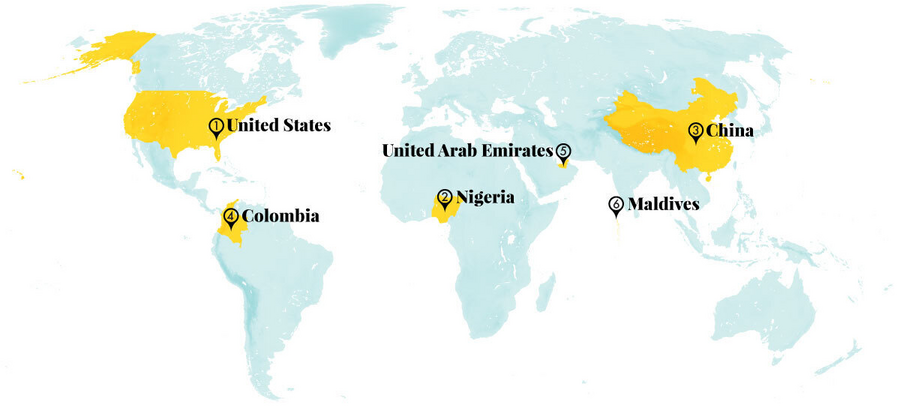
The Monitor鈥檚 roundup of global progress this week includes changing views of community, from a neighborhood in Atlanta to the voice of Nigerians in the U.K. to refugees in Colombia.
( 5 min. read )
When viewing paintings in person nourishes your joy, what happens when you have to do without? For our Los Angeles-based writer, the city鈥檚 gradual reopening means a return to art.听
( 3 min. read )
In one of his first concrete actions as U.S. president, Joe Biden ordered his first use of lethal military force on Feb. 25. He sent two war jets to Syria where they dropped seven bombs on facilities used by Iran-supported militias. An estimated 17 people were killed. President Biden, who has warned of a heavy reliance on American military intervention, is now the seventh consecutive U.S. president to order strikes in the Middle East.
Two days later, he explained to Congress that the bombings were necessary as a reprisal against those militias for a Feb. 15 rocket attack in Iraq that injured an American service member and killed a U.S. contractor. It was also meant as deterrence. 鈥淵ou can鈥檛 act with impunity. Be careful,鈥 he said in comments to reporters, sending a message to Iran and its armed proxies.
What these actions indicate are the qualities of leadership that Mr. Biden might use as chief executive and commander in chief over the next four years. In asserting a responsibility on an issue of war, was he transparent to Americans about his goals? Did he deliberate enough with top members of Congress to form a consensus on the use of force? Was he disciplined enough to stay within the law and not escalate a conflict?
That last question may be of most interest to lawmakers as the administration provides more details to Congress about the airstrikes during classified briefings this week. Democrats have been more critical than Republicans, especially as they want the president to focus on domestic needs. Some claim the strikes were offensive, not defensive. Others cite insufficient notice before the attack. Given how much Congress has walked away from its war-making powers and allowed presidents since the 1940s to act unilaterally with military actions, both parties are curious about Mr. Biden鈥檚 legal justifications.
One of his justifications, not used since Bill Clinton was president, was to claim an inherent right of self-defense for U.S. soldiers and their partners under Article 51 of the United Nations Charter. Mr. Biden did not justify the attacks by citing a 2001 law authorizing force against those responsible for the 9/11 attacks or 2003 law relating to the U.S. invasion of Iraq. Yet his most novel reason was that Syria was 鈥渦nwilling or unable鈥 to prevent the use of its territory by the militia groups held responsible for the attacks on Americans in Iraq, where there are about 2,500 U.S. troops.
Congress has not explicitly authorized U.S. military action in Syria. And a discussion of this issue may be a starting point for Mr. Biden to show a different kind of leadership by working with Congress to refine the legal underpinnings for future military action.
By being forthright in his justifications, Mr. Biden has earned enough trust with Congress for the two branches to define the proper thresholds and responsibilities for the use of force overseas. Qualities of leadership do matter on issues of war. With shared reason and wisdom, the separate powers of government can unite in deciding how military action can best achieve peace.
Each weekday, the Monitor includes one clearly labeled religious article offering spiritual insight on contemporary issues, including the news. The publication 鈥 in its various forms 鈥 is produced for anyone who cares about the progress of the human endeavor around the world and seeks news reported with compassion, intelligence, and an essentially constructive lens. For many, that caring has religious roots. For many, it does not. The Monitor has always embraced both audiences. The Monitor is owned by a church 鈥 The First Church of Christ, Scientist, in Boston 鈥 whose founder was concerned with both the state of the world and the quality of available news.
( 3 min. read )
Letting God, good, inform how we see ourselves and others empowers us to overcome seeming roadblocks in our lives.
Thank you for joining us today. Might a 9/11-style commission be a way to look into the events of the Capitol insurrection calmly and constructively? Tomorrow, our Christa Case Bryant will examine the idea 鈥 and why it might be hard in the current climate.