Speculation abounds over Michael Flynn鈥檚 motives for deceiving federal agents. One analyst suggests that the best explanation is usually the simplest one.
Our name is about honesty. The Monitor is owned by The First Church of Christ, Scientist, and we鈥檝e always been transparent about that.
The church publishes the Monitor because it sees good journalism as vital to progress in the world. Since 1908, we鈥檝e aimed 鈥渢o injure no man, but to bless all mankind,鈥 as our founder, Mary Baker Eddy, put it.
Here, you鈥檒l find award-winning journalism not driven by commercial influences 鈥 a news organization that takes seriously its mission to uplift the world by seeking solutions and finding reasons for credible hope.
About usAlready a subscriber? Log in
Already have a subscription? Activate it
Join the Monitor community.
SubscribeThis time of year is known as a season of light, and with good reason. You see it in so many small encounters: The man who stops to chat with a homeless man about last night鈥檚 game. The woman who tucks money into a Salvation Army bucket 鈥 and then adds more with a smile. Neighbors who welcome a newcomer with a group dinner.
Without fail, the individuals who give of their time or heart note how much more they receive.
Take Moses Elder, a homeless man in Phoenix who assisted an anonymous businessman in his holiday practice of . 鈥淭oday we changed a lot of people鈥檚 lives. But I believe my life was changed the most.鈥
Or Kari Suhadolnik, who joined others in Ohio鈥檚 Stow-Munroe Falls school district to clear the lunch debts of 515 low-income students. She is energized. 鈥,鈥 she says.
Or Wade Bender. He speaks of men at a correctional facility in Gunnison, Utah, who paint cheerful faces on more than 100,000 wooden toy cars that volunteers at Tiny Tim鈥檚 Foundation for Kids before Christmas. 鈥淭hey鈥檒l tell us, 鈥楾his is the first time I鈥檝e done something for somebody else. Thank you.鈥 鈥澛
As founder Alton Thacker says, 鈥淚鈥檝e always said that the secret of happiness is to make somebody else happy. So after the New Year, we鈥檒l start all over again.鈥
Now to our five stories for today.
Already a subscriber? Log in
Monitor journalism changes lives because we open that too-small box that most people think they live in. We believe news can and should expand a sense of identity and possibility beyond narrow conventional expectations.
Our work isn't possible without your support.
And why we wrote them
( 7 min. read )
Speculation abounds over Michael Flynn鈥檚 motives for deceiving federal agents. One analyst suggests that the best explanation is usually the simplest one.
( 4 min. read )
The recent turmoil in stock markets has some people thinking the mattress is a good place to put their money. Our writer explains why that might not be the best conclusion just yet.
( 6 min. read )
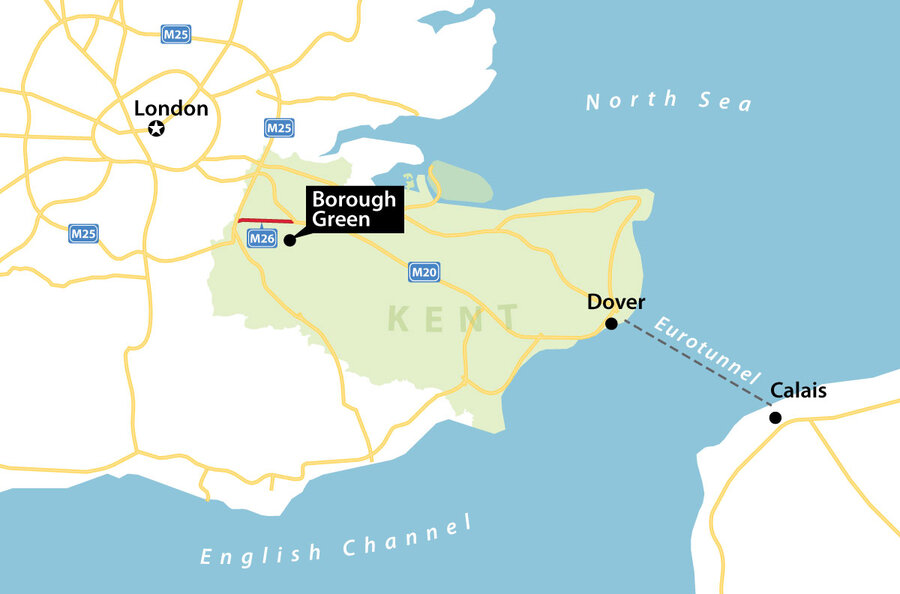
A Brexit without a deal? This story offers a cautionary tale about what the consequences might be 鈥 including massive traffic jams.
( 9 min. read )
This story offers a different kind of cautionary tale. Tanzania made an unparalleled decision to grant citizenship to a large refugee community. But promised assistance didn鈥檛 follow.
( 4 min. read )
The solitary act of reading becomes more social 鈥 and maybe a little more competitive 鈥 at a typical book club. Here鈥檚 a middle-ground idea for the shy or homework-averse.
( 3 min. read )
In his oft-cited book 鈥淒emocracy in America,鈥 19th-century Frenchman Alexis de Tocqueville observed, 鈥淭he health of a democratic society may be measured by the quality of functions performed by private citizens.鈥
A 21st-century translation: Helping others matters.
And there鈥檚 a side benefit: It鈥檚 a joy.聽
鈥淕iving until it hurts is a bad way to think about it,鈥 billionaire philanthropist Bill Cummings told Forbes recently. 鈥淲e give until it feels good.鈥 The Cummings family, who have no expensive toys (his wife still clips coupons and they almost always fly economy class), are quietly and gradually giving their fortune to charity.聽
In deciding where to give, they rely on a committee of some 80 local volunteers from their community near Boston. These volunteers 鈥渞eally struggle鈥 with making the best choices about where to donate, Mr. Cummings says. 鈥淚t鈥檚 so satisfying for me and Joyce to see how much they care.鈥
Most Americans recognize the need to be charitable: Giving by individuals reached an estimated $286.65 billion in 2017, an increase of 3 percent from the previous year (adjusted for inflation), according to a report from Giving USA.聽
While most people don鈥檛 have a small army of eager researchers to steer their year-end giving, nonprofit groups such as Charity Navigator and GuideStar are quick online resources in finding well-run charities that support worthy causes around the world.
Giving best starts from the heart. According to Barna, a 海角大神 organization that researches American values and beliefs, 62 percent of those who become involved in a charitable cause do so at first because they believe they can make a difference; 45 percent had seen or heard a moving story that motivated them.
This desire to help overcomes feelings of so-called compassion fatigue that argue the problem is hopeless, defying remedy.
Among the questions givers might ask themselves when deciding where to donate:聽
Does this cause or institution get at a very important problem?聽
Is this a 鈥渘eglected cause鈥 that isn鈥檛 receiving as much support as it deserves?聽
Does this charity or institution have a sound track record for making a real difference? Is it well managed, with low overhead expenses?
Sending money, of course, isn鈥檛 the only way to give. Americans have a strong track record of volunteering. But the recent trend line hasn鈥檛 been positive: Volunteerism hit a high between 2003 and 2005, when 28.8 percent of Americans said they had volunteered during the previous year. More recently that number has dropped to 25.3 percent.
鈥淎s a nation, we must commit resources and time to the challenging work of putting more Americans back to work improving and engaging with their communities,鈥 says Robert Grimm, director of the Do Good Institute at the University of Maryland, who co-wrote a November report called 鈥淲here are America鈥檚 Volunteers?鈥 that measured the drop.聽
Volunteering also can replace the isolation sometimes felt by living in the world of social media (Facebook, et al.), by providing opportunities for real human contact.
The decision to give shouldn鈥檛 lie only in crunching numbers and making a ledger of pluses and minuses. It springs from the heart.聽
鈥淚 am as light as a feather,鈥 shouts Ebenezer Scrooge after his epiphany on giving in Charles Dickens鈥檚 鈥淎 Christmas Carol.鈥 鈥淚 am as happy as an angel, I am as merry as a school-boy.鈥澛
Whether writing a check or volunteering, today鈥檚 givers should expect to experience that innate joy.
Each weekday, the Monitor includes one clearly labeled religious article offering spiritual insight on contemporary issues, including the news. The publication 鈥 in its various forms 鈥 is produced for anyone who cares about the progress of the human endeavor around the world and seeks news reported with compassion, intelligence, and an essentially constructive lens. For many, that caring has religious roots. For many, it does not. The Monitor has always embraced both audiences. The Monitor is owned by a church 鈥 The First Church of Christ, Scientist, in Boston 鈥 whose founder was concerned with both the state of the world and the quality of available news.
( 3 min. read )
Today鈥檚 contributor recalls a Christmas when the light of God鈥檚 pure love broke through mental darkness, freeing her from a deep sense of anguish and hopelessness.
We鈥檙e glad you started your week with us. Please come back tomorrow for the final episode of our podcast 鈥淧erception Gaps.鈥 Host Samantha Laine Perfas will explore why such gaps exist 鈥 and what the media鈥檚 role is in closing them.