As Senate Republicans roll out their new health-care plan, there's a lot of chatter about the secrecy that has surrounded it. But those concerns might be missing the more important point. 聽
Our name is about honesty. The Monitor is owned by The First Church of Christ, Scientist, and we鈥檝e always been transparent about that.
The church publishes the Monitor because it sees good journalism as vital to progress in the world. Since 1908, we鈥檝e aimed 鈥渢o injure no man, but to bless all mankind,鈥 as our founder, Mary Baker Eddy, put it.
Here, you鈥檒l find award-winning journalism not driven by commercial influences 鈥 a news organization that takes seriously its mission to uplift the world by seeking solutions and finding reasons for credible hope.
About usAlready a subscriber? Log in
Already have a subscription? Activate it
Join the Monitor community.
Subscribe
Mark Sappenfield
The terror attacks that have struck Europe have come with a notable exception. Italy has not had a major terrorist attack since the 1980s.聽
In some ways, the distinction reflects Italy鈥檚 different realities. A smaller share of its population is Muslim than in Germany, Britain, or France. But how Italy approaches terrorism also matters: It is using the lessons it learned in tackling the Mafia. That means an attentive, no-nonsense approach. Yet it also involves an important shift in mind-set.
Terrorism aims to present a terrifying picture. During my time as a reporter in Pakistan, however, it became clear that it is also just an industry. It tempts young men with no job prospects. It brings wealth and influence to local bosses. The Osama bin Ladens of today are in some respects the Al Capones of the past. That doesn鈥檛 diminish the challenge, but it can change how we see terror, and it can also help in correctly diagnosing the deeper problems and solutions.
Already a subscriber? Log in
Monitor journalism changes lives because we open that too-small box that most people think they live in. We believe news can and should expand a sense of identity and possibility beyond narrow conventional expectations.
Our work isn't possible without your support.
And why we wrote them
( 4 min. read )
As Senate Republicans roll out their new health-care plan, there's a lot of chatter about the secrecy that has surrounded it. But those concerns might be missing the more important point. 聽
The relationship between the press and the White House might seem unprecedented, but it reflects a change long under way in how Americans perceive their institutions.
( 8 min. read )
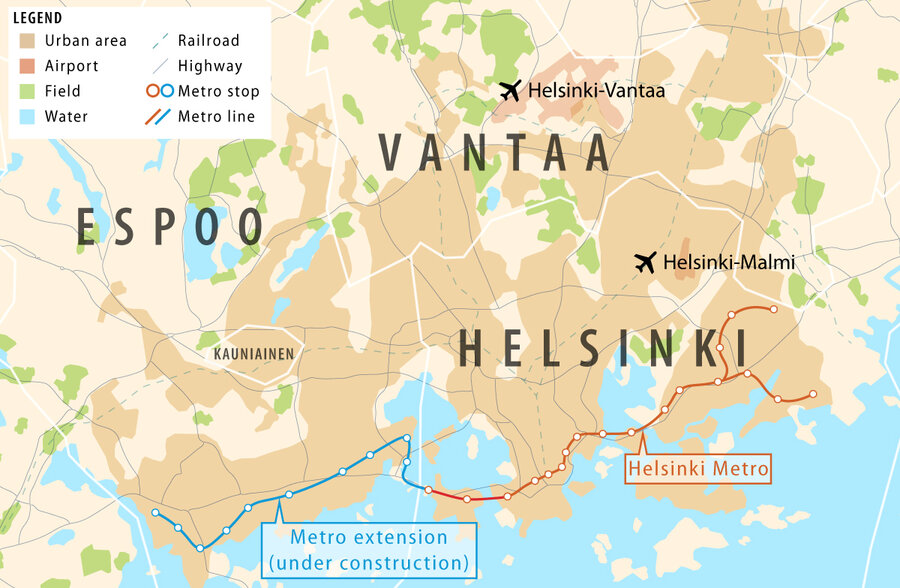
How do you change car drivers' behavior? It's a question that's been debated from Los Angeles to London for decades. But here's a Nordic twist: What if a city could reengineer itself to make cars a bad investment? Helsinki, Finland, is trying to do just that. 聽聽
( 5 min. read )
When can France veto the First Amendment? When the internet brings the free-speech values of American tech companies聽into Europe's backyard, perhaps. In that way, the internet is fueling a larger clash over countries' different visions of fundamental rights.聽
( 4 min. read )
In the Muslim world, this year's Ramadan is showing how technology can significantly change a core religious observance.聽
( 2 min. read )
Three years after the Ebola epidemic, and two years since the Zika outbreak, experts are more active than ever in pulling together lessons in hopes of not repeating past mistakes during another health crisis. A Senate panel in Washington plans a hearing soon on 鈥減andemic protection.鈥 In May, the Department of Health and Human Services issued a new strategy for pandemic influenza. And the World Health Organization has a new leader promising better preparation and response.
One big lesson learned is the need to prevent panic during a public health emergency. The new phrase is to 鈥渇ear-guard鈥 a country. During many disease outbreaks, say experts, a 鈥減andemic of fear鈥 can be more devastating to a society and an economy than the disease itself. Business and travel stop. Trust in a government鈥檚 ability to handle a crisis evaporates. People stigmatize each other. Most of all, panic can disrupt care and comfort to the sick.
A 鈥渃ontagion of fear鈥 often causes enormous economic disruption. The three countries worst hit by Ebola, Sierra Leone, Liberia, and Guinea, lost 10 percent of their gross domestic product. Gambia, which had no reported cases of Ebola, saw a 50 percent drop in flights in early 2015.
Two new studies help point to solutions.
One, sponsored by the World Bank and the Wellcome Trust, calls for an end to the cycle of 鈥減anic and neglect鈥 to disease outbreaks. The report states; 鈥淧andemics attract a lot of attention when they are at their height; but once the worst is over, the sense of urgency disappears, both at the global and country level, and we start all over again.鈥
One global problem is that only one-third of countries have the ability to detect and respond to public health emergencies. But for all countries, which are more connected and interdependent than ever, fear can spread 鈥渆xtraordinarily rapidly,鈥 the report adds.
The other report, titled 鈥淧andemonium鈥 and published by Global Governance Futures, says improved institutions and better financing are not enough to deal with the effects of fear in an outbreak. It suggests non-health sectors, such as religious institutions and other community influencers, should help. News media, for example, can agree beforehand on how to deal with rumors and avoid sensationalism and gross generalizations. Social media giants such as Facebook could have guidelines on how to deal with misinformation during a crisis.
鈥淩esponding to fear and misinformation will be one of the most critical challenges in handling future pandemics,鈥 the report states.
Or as Florence Nightingale, a pioneer in health care, advised nurses in the 19th century: 鈥淗ow very little can be done under the spirit of fear.鈥
Each weekday, the Monitor includes one clearly labeled religious article offering spiritual insight on contemporary issues, including the news. The publication 鈥 in its various forms 鈥 is produced for anyone who cares about the progress of the human endeavor around the world and seeks news reported with compassion, intelligence, and an essentially constructive lens. For many, that caring has religious roots. For many, it does not. The Monitor has always embraced both audiences. The Monitor is owned by a church 鈥 The First Church of Christ, Scientist, in Boston 鈥 whose founder was concerned with both the state of the world and the quality of available news.
( 2 min. read )
When efforts to become more attractive involve surgical enhancements, one mother wants to help her daughters find beauty beyond the physical. One definition of beauty includes this: 鈥渏oy and gladness; order; prosperity; peace; holiness.鈥 These attributes suggest that what鈥檚 beautiful is actually of a spiritual nature. Aren鈥檛 we all able to express the love, joy, and grace that make up true beauty?
Have a great weekend. If you're looking for a movie, Monitor film critic Peter Rainer says that to call聽"The Big Sick" "the best comedy of the year is to skimp on its appeal." Based on the life of Kumail Nanjiani, a Pakistani comic, and his wife, Emily Gordon, a television comedy writer, "it's about the fraught courtship of two cultures."
We'll see you Monday, when we'll be looking at the US Supreme Court's term and the potentially landmark cases still left to be decided.